
Results Require Routine. Success is Built on Habits, Not Moods.
“I just need to get motivated.”
How many times have you said that?
I know I’ve said it throughout my 36 years of working out. But the more I think about it, the more I realize that motivation has probably gotten way too much credit.
Because motivation is a feeling. And feelings change (“It’s not you, it’s me 😂).
There are mornings when I wake up ready to go. I want to work out. I want to take Journie for her walk. I want to cook something healthy. I want to sit down and work on my business.
And then there are days when I just don’t wanna!
If I waited until I was motivated every time, I wouldn’t have gotten my Fast Like A Girl Fasting certification. I wouldn’t have started the Coach with Confidence course I’m going through now. I wouldn’t have designed (and then redesigned) my website, blog, or newsletter. I wouldn’t have begun building my coaching business. And I wouldn’t have completed or even started creating The 7-Day SHIFT.
And then there’s consistency. I’ve said it over and over again…Consistency is Key! But this is where I think we can get that wrong too.
Consistency doesn’t mean forcing yourself to do everything no matter how you feel. That sounds a whole lot like the pushing harder I wrote about last week — and we already know where that got me.
For me, consistency looks different now. It’s having certain things in my life that I come back to again and again. Not because I’m always motivated to do them, and not because I execute them perfectly, but because I know they support the life I want to live.
And I think that’s where routine comes in.
I Hated Routine.
For a long time, I defined routine as doing the same things at the same time, day in and day out. Whether I felt like it or not. If you told me I needed more routine in my life, I would have fought you hard on that. Insert eye roll, smirk, head shake.
I didn’t like schedules. I didn’t want every part of my day planned out. I didn’t like showing up at the office at 8AM, taking my lunch at noon, and leaving for the day at 5PM. Someone telling me what I was supposed to do at 10AM on a Tuesday was not for me. I’m very independent and I like to make my own rules. 🤣
Even my workouts weren’t scheduled. I may have gone to the gym seven days a week, and I usually went around the same time, but I went because I wanted to go. Working out is something that I love, so I didn’t need to put it on my calendar to make myself do it.
How many times have you heard “Put it on your calendar?” or “Schedule your workouts just like you would schedule a meeting or a doctor’s appointment?” There is something to that, but I just couldn’t (or wouldn’t) do it.
And maybe that’s why I never gave much thought about the difference between motivation, consistency, and routine. When you already want to do something, you don’t really have to think about what keeps you doing it.
That’s where my thinking about routine has started to change. I still don’t want every minute of my day dictated by a schedule. That’s never going to be me.
But I have learned that having some routines doesn’t take away my freedom. In a lot of ways, it’s actually given me more of it.
So, What Changed?
Funny enough, I don’t think I woke up one morning and decided “Melissa, you need more routine today.” It happened little by little.
I started getting better sleep. I started enjoying slower mornings and getting out in the light more. I started reading more and scrolling less. A lot less. I started walking (I used to think walking was useless. Push harder in the gym instead 😂). I became more intentional about my workouts and what I was eating.
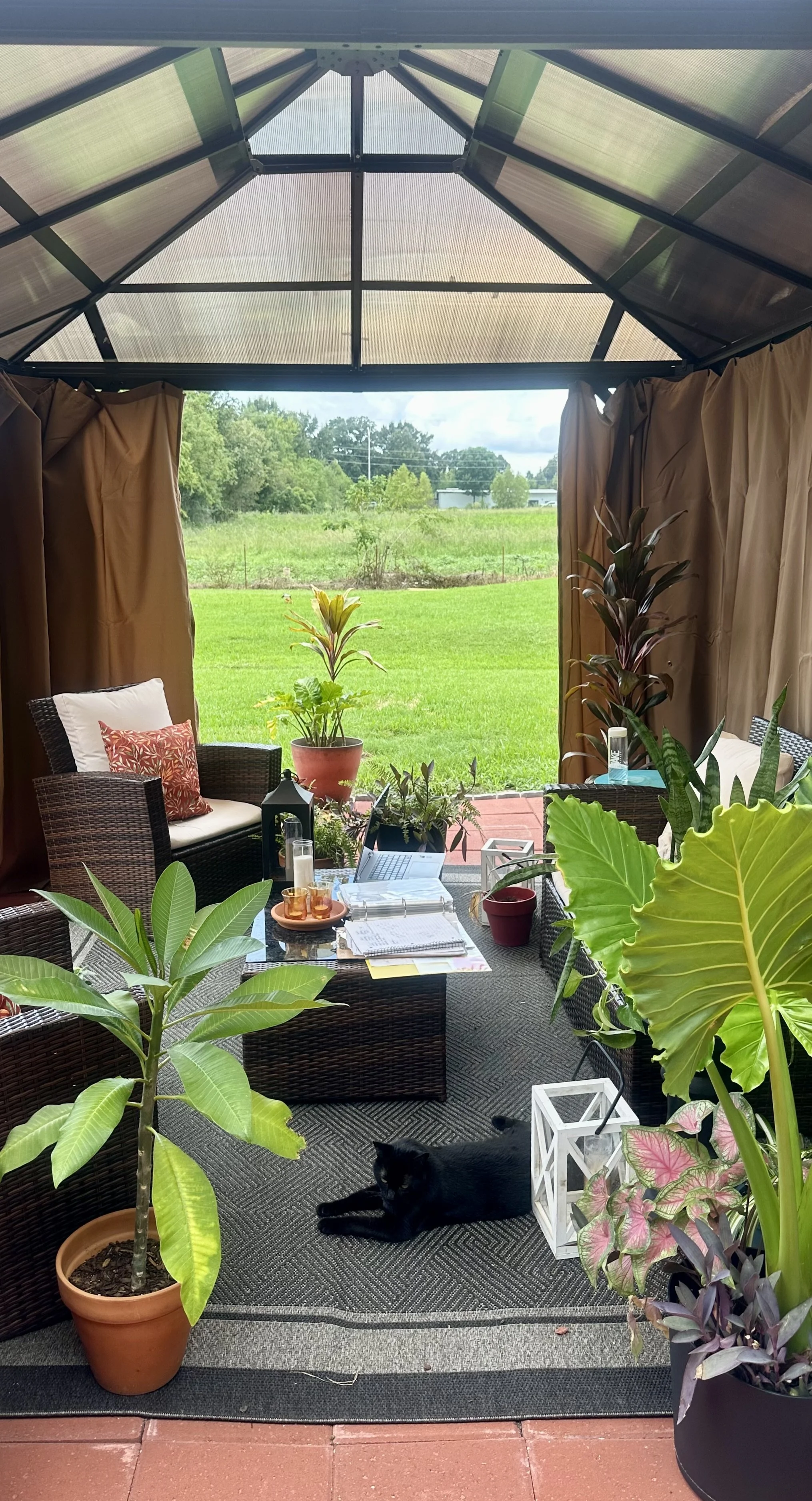
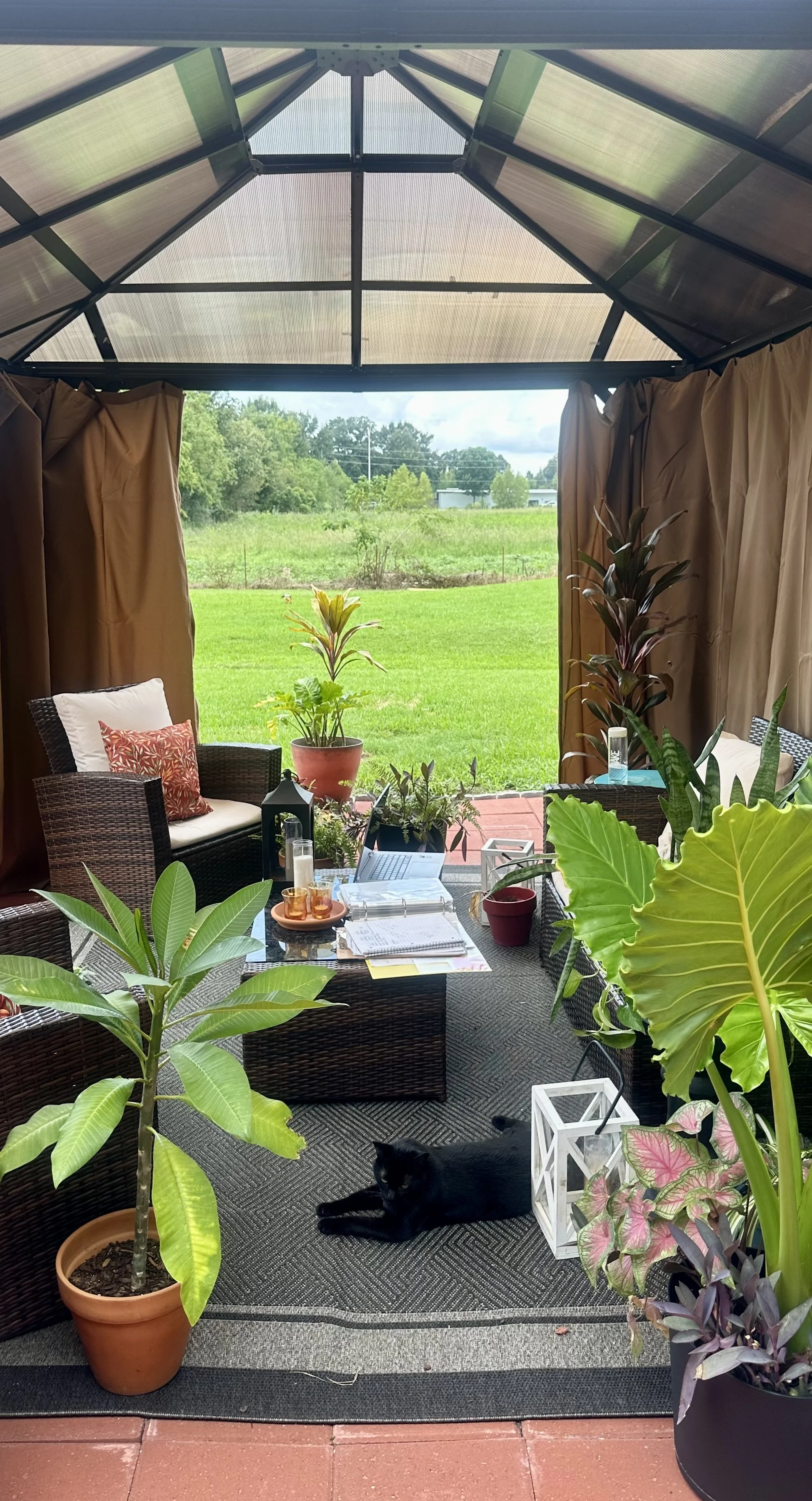
Most mornings now start slowly. I get up, take care of the fur babies, mix up my electrolytes, take my supplements, grab my “mobile office” and head out to the gazebo to read or listen to something educational.
Then I get dressed, take Journie for a walk, and come back to settle in to work on my business.
This has been my morning routine pretty much every single day since the pavers and gazebo have been up. For as much as I used to hate routine, I love this one!
And as those things were changing, I was also putting more energy into building my coaching business.
Suddenly there were blog posts to write, a newsletter to send, programs to create, certifications to work on, people to follow up with, and about 47 other things floating around in my head at any given time. “Calgon, take me away!”
Waiting until I felt like doing something wasn’t going to work anymore. And neither was trying to do everything whenever I happened to think about it.
So, the woman who spent most of her life saying she hated routine started creating some. Not a minute-by-minute schedule. Not something so rigid that one unexpected thing throws off my entire day. Just certain things that have a place.
And something surprising happened. I started getting more done while feeling less scattered. Who knew?!
I wasn’t spending as much time deciding when I was going to do something or hoping I’d feel motivated enough to do it. Some things were simply becoming what I do. And that’s when this whole idea really clicked for me:
Results require routine because motivation can’t be responsible for carrying you every single day.
Routine Is What Makes the Habit Easier.
I no longer think that routine means having a set schedule.
A routine simply gives something important a place in your life. And when you repeat it often enough, you don’t have to make a brand-new decision about it every single day.
Think about how many things you already do without needing motivation. You brush your teeth. You make your morning beverage. You feed your animals. You probably have a certain place you sit in the morning or a certain order you do things before you leave the house.
You don’t wake up and think, “Am I motivated enough to brush my teeth today?” 🤣You just do it.
Obviously, working out, preparing food, getting outside, or sitting down to work on a goal takes more effort than brushing your teeth. But I think the principle is similar.
The more often something has a place in your life, the less you have to rely on your mood to make it happen. And that’s been a big shift for me. I don’t have to feel like doing everything I’ve decided is important to me. I just need to make it easier to come back to those things consistently.
Because one workout doesn’t make you strong. One healthy meal doesn’t change your health. One good night’s sleep doesn’t restore months or years of exhaustion. One productive day doesn’t build a business.
It’s what you repeat that eventually creates the result.
And maybe that’s what I’ve been misunderstanding about routines all these years. Routine isn’t about controlling every part of my day. It’s about making room for the things that matter to me.
What About the Days You Just Don’t Wanna?
Because those days are going to happen. I can have the best intentions on Sunday and wake up on Wednesday thinking, “Nope. Not today.” And I think this is where I used to give motivation too much power.
If I wasn’t motivated, I assumed I needed to somehow get motivated. Find the right song. Listen to something inspiring. Give myself a pep talk. Wait until Monday. You know the drill.
But maybe we don’t always need to change our mood before we take action. Sometimes we can just do the thing anyway. And sometimes we shouldn’t. That’s an important distinction for me now.
There’s a difference between “I don’t feel like walking Journie today” and “My body is telling me I need to rest today.” There’s a difference between not being in the mood to work on something and being mentally exhausted and needing to step away.
After spending so many years pushing through everything, I don’t want my routine to become another way of ignoring what my body is telling me. So now I ask myself a different question: Do I need rest, or do I just not feel like doing it? Those are not the same thing.
And when the answer is simply “I don’t feel like it,” that’s when the routines and habits I’ve built can carry me when motivation isn’t there. I don’t need to have the right mood first.
I can take the walk. Make the meal. Do the workout. Write this blog post. And very often - most often - I’m glad I did.
Success isn’t built on being motivated every day. It’s built on knowing when to honor what you need — and when to stop letting your mood make the decision.
What Are You Waiting For?
Maybe there’s something you keep saying you want to do. Start walking. Start lifting weights. Eat more protein. Start a business. Call a friend. Read the book.
But you keep waiting for the day when you suddenly feel motivated enough to do it. What if that feeling never comes? What will you miss out on in life? What could change if you finally made that call? How will you feel when you start working out? What will you accomplish when you start that little side gig?
Maybe instead of asking, “How do I get more motivated?” the better question is: “How can I make this part of what I normally do?” Not perfectly. Not seven days a week, and definitely not at the expense of ignoring your body. Just often enough that you stop having to start over.
I still don’t want my entire life scheduled. Heck, that’s point of this whole “retirement’ thing, isn’t it? I still like having freedom in my days, and I don’t see that changing.
But I’ve learned something that I wish I had understood a long time ago: Routine doesn’t have to take away your freedom. It can give the things that matter to you a place to live. And when those things have a place, they’re much more likely to get repeated.
Repetition becomes consistency. Consistency creates results. And now the title I wrote at the top of this page makes a whole lot more sense to me: Results require routine. Success is built on habits, not moods.
Want a Simple Way to Put This into Practice?
If there’s a habit you’ve been wanting to build, you don’t need to create an entirely new routine. Habit stacking simply means connecting something you want to start doing to something you already do consistently.
I’ve created a free 10-page Habit Stacking Guide to help you choose an existing habit, decide what you want to add to it, and make that new habit easier to repeat.
Pushing Harder Works…Until it Doesn’t
Before this thing called “midlife” was anywhere near my radar, I was in complete control of my body. If I wanted it to change, I knew what to do. Workout harder, lift heavier, cut back on the junk food. Easy work.
Until it wasn’t.
It felt as if it was almost overnight that everything changed. But looking back, I now see how a little fatigue here and a little lack of uninterest here slowly snowballed into the weight gain, brain fog and hot flashes — and eventually into someone I didn’t recognize when I looked in the mirror.
All I really knew to do was what I had done for decades: push harder.
But that backfired. I wasn’t listening to the clear signals that my body was giving me—that I needed to step back.
But I didn’t.
I kept going, and then it happened. The one thing that I thought would always be a part of my life no matter — working out — was suddenly as much of a priority to me as was reorganizing the laundry room.
And that definitely caused a “Who are you, and what have you done with Melissa?” situation.
So, What Finally Made Me Stop Pushing?
I think I was just exhausted. Not “I need a day off” tired. More like the kind of exhausted where even the things that had always been part of who I was started feeling hard.
I had spent years overriding that feeling. Without even knowing it. I thought working out 7 days a week was keeping me sane!😂 I love going to the gym, being at the gym, the endorphins I’d get after completing a really tough workout, and how my body responded. I knew recovery was a thing, but I thought “I don’t get sore, and I like the way I look, so I must not need to rest.
But eventually it caught up with me, and I didn’t have anything left to push with.
Then a year ago this month is when things started changing. I started taking a sleep peptide called Restored by MAKE Wellness and that’s when my sleep started to improve. I went from getting around 3 hours of sleep (for as far back as I can remember) to getting about 7 hours. And it wasn’t just sleep a little, wake up, lay there for a while longer before falling back asleep. This was deep, uninterrupted sleep. And if you haven’t experienced the difference in that kind of rest, you can’t possibly understand how much this one area changed my life.
One of the first ways I noticed the difference was in my mandatory naps. They started getting shorter and shorter, and eventually I wasn’t waking up feeling as depleted. Over time, my energy increased, and that gave me enough energy to start approaching other parts of my health differently.
I didn’t suddenly become the version of myself I feel like today. That came later. But better sleep gave me the starting point I was looking for.
When I stopped Fighting My Body
Once I started sleeping better, I had enough energy to actually pay attention to what my body was telling me.
And I started realizing that maybe the answer wasn’t to keep pushing harder. But for years that was my default, so doing less felt strange at first.
I went to the gym less often. And as hard as it was for me, I made myself pick up lighter weights. Why was that so hard for me? Probably my ego. I think I’m pretty strong for my small frame, and I always wanted to prove it. But as the saying goes, I had to leave my ego at the door.
Eventually I stopped feeling like every workout had to leave me completely spent in order to count. And guess what? My body didn’t fall apart because I stopped pushing it so hard. Quite the opposite.
Then I started looking at some other things I had been ignoring.
I became more intentional about protein, fiber, and vegetables. I’ve always eaten pretty good, but being intentional about how much of those things I was getting was something new for me. Again, I was used to what used to work. Now I had to actually think about it. So that’s when I started fasting and experimenting with what actually felt good for me instead of assuming I needed to eat or exercise a certain way.
I was also reading more, listening to podcasts, taking courses, and actually letting myself be coached for a change. A coach needs to be coached too!
So, I Created a Different Kind of Challenge
All of this changed the way I started thinking about helping other women, too.
Because if you’re a woman in midlife, chances are you already know a lot of the things you’re “supposed” to be doing. Eat more protein. Get enough fiber. Lift weights. Walk. Sleep. Stay hydrated. Manage your stress. The list can get long really fast.
And if you’re already overwhelmed, is another giant list of things to do really what you need? I don’t think it is.
I think sometimes you need a place to start. A few things to notice. A few things to try. And enough space to pay attention to how your body responds.
That’s why I created The 7-Day SHIFT. I wanted to create something that would help women start connecting the pieces without feeling like they had to overhaul their entire lives.
For seven days, I’ll introduce you to tools and ideas I’ve learned through my own experience, education, and coaching training. You’ll get to choose what makes sense for you, experiment with it, and most importantly, pay attention to how you feel.
Because the goal isn’t for you to finish seven days following all of my rules. The goal is for you to finish seven days knowing a little more about you.
What’s Included in the 7-Day SHIFT?
This wasn’t thrown together in a weekend. I built The 7-Day SHIFT intentionally so you’re not just getting information — you’re getting a clear path, simple actions, tools to help you notice your patterns, and support along the way.
Inside The 7-Day SHIFT, you’ll have:
The 7-Day SHIFT Guide & 7 daily lessons to walk you through the week.
A Nervous System Questionnaire & Support Tools to help you recognize your patterns and find practical ways to support yourself.
A Lifestyle Signal Scan to help you look at the different areas of your life and notice what may deserve more attention.
Fasting education, including common fasting windows and myths, so you can decide whether fasting is a tool that makes sense for you.
My SHIFT Plan, where you’ll decide what you actually want to continue working on after seven days.
Your own client portal, where you’ll have access to daily check-in prompts to keep you accountable, and a private community, so you’re not doing this by yourself.
Free access to a wellness app.
A guided Sunday SHIFT session to bring everything together.
Support from me throughout the experience so you have somewhere to ask questions as you work through it.
I wanted this to feel simple for you because a lot of thought went into it behind the scenes. You don’t need more overwhelm. You need a clear place to start.
The first SHIFT begins September 27. If this sounds like a place you need to start, I’d love to have you join me.
Was it Menopause, Covid, or Was My Nervous System Carrying Too Much?
For a long time, I blamed COVID.
I couldn’t think clearly. Sometimes I struggled to form a thought, much less explain how I was feeling. I had brain fog, my body was changing, and I didn’t feel like myself.
Over a span of about a year or two, I had COVID three times, so naturally I assumed that all of my doom and gloom symptoms were related to that.
Then the night sweats and hot flashes arrived, and I started realizing… it was happening to me! I was in the midst of a major life change. Suddenly I had another explanation for my body betraying me. Maybe it was my hormones. It started to make sense!
By the way, I never gave menopause a second thought in my 40’s—and I regret that now. Ladies, educate yourselves before it hits you like a ton of bricks that you never saw coming!
But lately, I’ve started asking a different question. What if it wasn’t just one thing?
When I look back at those years now, I realize just how much my body had been carrying. Within the span of a year, I lost my dad, fiancé, and my dog.
And I kept going. From the outside, I probably looked like I was functioning. And in many ways, I really was. But I’ve started to wonder whether functioning and processing what we’ve been through are the same thing. Because life didn’t exactly become quiet after that.
There was COVID. Perimenopause and eventually menopause. A car accident. My husband’s cancer. His back surgeries. And another car accident that kept me out of the gym for over a year.
Only now am I beginning to understand that grief and prolonged stress don’t exist only in our thoughts. Our bodies experience it too.
What Does Grief Have to Do with Your Nervous System?
When we experience a major loss or prolonged stress, our brain and body respond too. Our nervous system is constantly taking in information and helping determine whether we’re safe, whether we need to react, and whether we can finally relax. You’ve probably heard this described as flight, flight, or freeze.
That response is useful. The question is what happens when life keeps handing us one stressful event after another, without much time between this happened and now this happened too?
Research on bereavement has found that grief can be associated with changes in the body’s stress-response system, sleep, heart rate, blood pressure, and immune and inflammatory activity. In other words, grief isn’t only something we feel emotionally. Our bodies experience it too.
When Symptoms Start Looking Like Each Other
This is where things get complicated for women in midlife. Brain fog, difficulty concentrating, poor sleep, mood changes, fatigue, changes in appetite and energy—hormones, stress, grief, illness, lack of sleep and even recovery from COVID—can start looking remarkably similar.
I had all of those things happening at once. So, even though I blamed COVID for everything in the beginning, and then menopause, I’m not sure either tells the whole story. Maybe there wasn’t just one culprit. Maybe my body was just responding to everything it had been asked to carry.
That’s an important distinction because I think sometimes, especially as women in midlife, we desperately want to identify the thing.
It’s my hormones. It’s cortisol. It’s my thyroid. It’s COVID. It’s menopause. It’s stress. If I can just figure out which one is broken, maybe I can fix it.
But our bodies aren’t always that simple.
So, What Does Supporting Your Nervous System Actually Look Like?
I’m not suggesting that we can breathe our way out of grief or take a walk and erase years of stress. And I definitely don’t think we need another wellness checklist that makes us feel like we’re failing if we’re not meditating, journaling, stretching, sleeping eight perfect hours, and drinking something green before 8a.m.
Sometimes support is much simpler: sleep, movement, time outside, nourishing food, rest, connection and doing things that makes us feel like ourselves again.
Looking back, I realize I may have instinctively created some of those things for myself without knowing why I needed them.
Exercise had always been part of my life, and during the pandemic, it gave me something familiar to hold onto. Even when all the gyms got shut down, I found a way to keep moving. I worked out alone at a park. I also offered online workouts. That’s when I decided yoga was not for me! 🤣
Some of my absolute favorite things are sunrises and sunsets, so I started sharing pictures every morning and every evening, and as a way to stay connected to others during the pandemic, I invited other people to do the same. We captured some gorgeous views!


Another dog unexpectedly came into my life very soon after Scout passed, and I poured a lot of love into her because she needed it. That’s actually where her name, Journie, came from. She was a neglected pup who was scared of her own shadow and helping her feel safe was my number one mission. Right away I knew that we needed each other at that very time and we were going on a journey together toward something better.

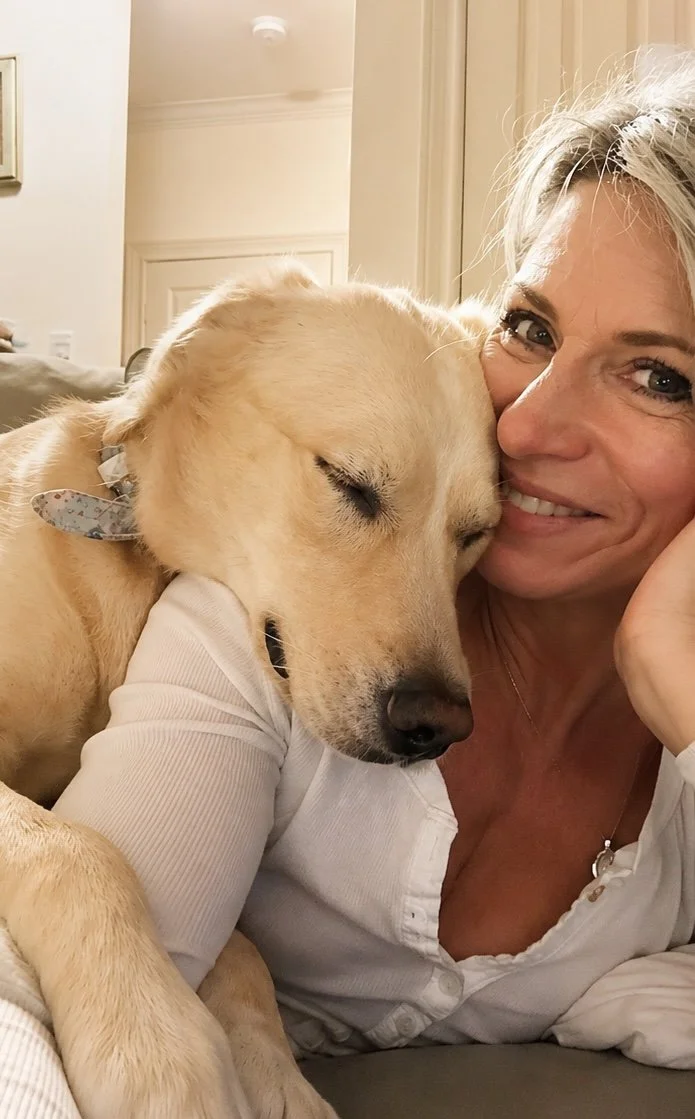
And although I’ve talked about my losses on social media, I’ve never sat down with a professional to talk about my grief. Honestly, I haven’t talked about it much with anyone personally. But I have talked about it. I’ve shared pictures. I’ve told stories. I’ve remembered birthday and anniversaries.
But maybe social media became one of the ways I found to talk about grief when I couldn’t necessarily explain what I was feeling face-to-face. And maybe some of those other things—the workouts, the outdoors, the connection, my dog—were helping me too.
I don’t need to look back now and decide whether I grieved the “right” way. In my opinion, there is no right way. Just the right way for you. What I can do is recognize what I’ve been through and become more aware of what my body may need now.
Grief Doesn’t Always Look Like Sadness
When we hear the word grief, we picture crying and sadness. But what if you’re not crying? What if you’re working? Exercising? Taking care of others? Starting something new? Showing up every day?
You can be functioning and still be carrying something. And recognizing that doesn’t mean we need to stop living our lives and analyze every difficult thing that’s ever happened to us. It simply gives us another piece of information.
Maybe that brain fog deserves a conversation with your doctor. Maybe your sleep needs attention. Maybe what you’ve been calling laziness is exhaustion. Maybe you’ve been pushing harder when what you really need is recovery.
Maybe Grief Doesn’t Need an Ending
I think for a long time I assumed grief was something you were supposed to work through and eventually put behind you. I’m not sure I believe that now. For example, I miss my dad every day. It’s going on eight years already.
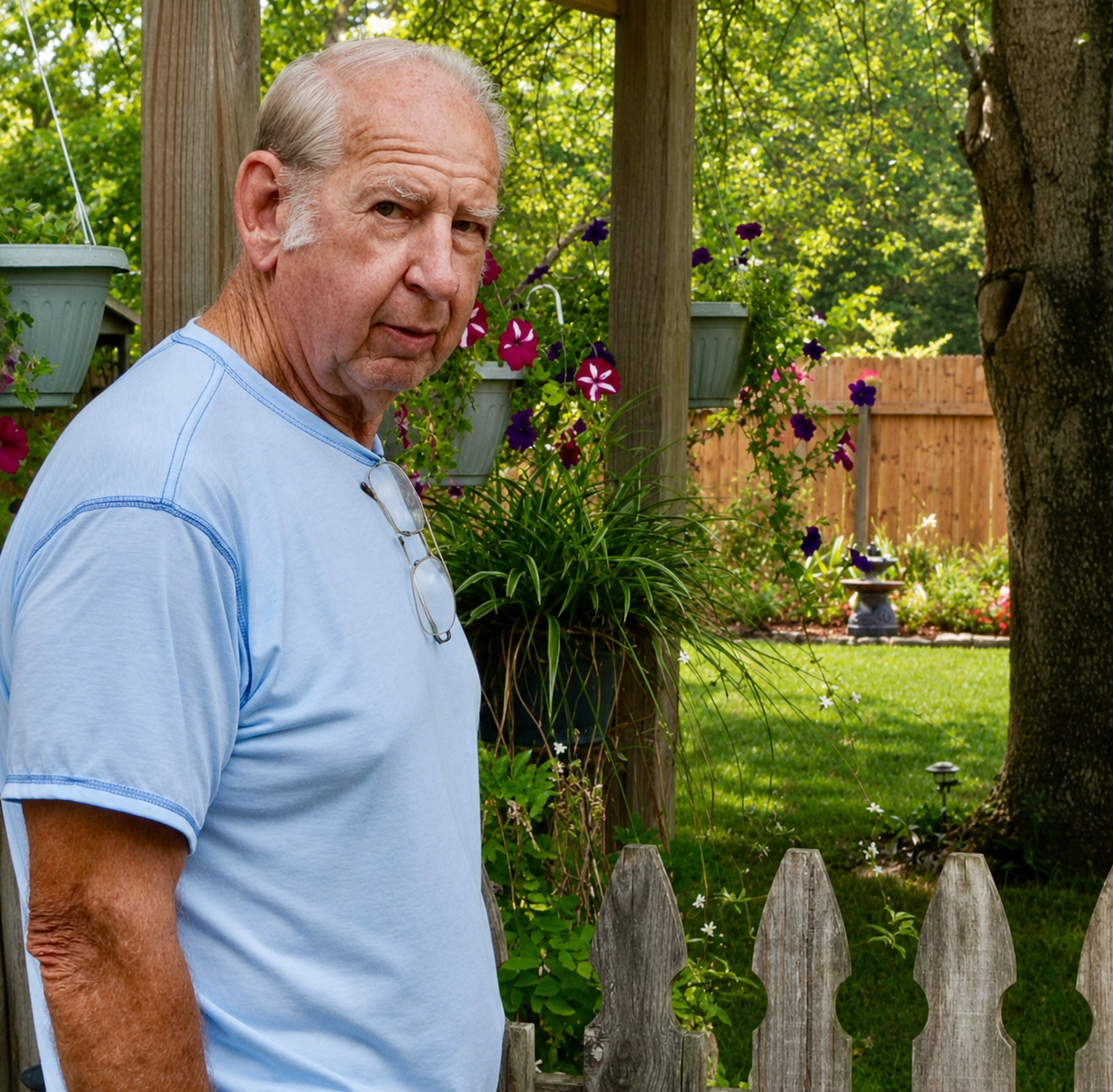
There were three things people knew about my daddy.
He loved his family.
He loved his birds.
He loved his yard.
There are things about my life now that make me miss him in completely new ways. I have a home with flower beds that I love working in, and my dad loved his yard. I think about how much he would enjoy seeing what I’m planting, my butterflies and our backyard project. And I think he and Kevin would have become very close. There’s a sadness in knowing that they never got that chance. I know he would be overjoyed knowing that I’m in my safe place once and for all.
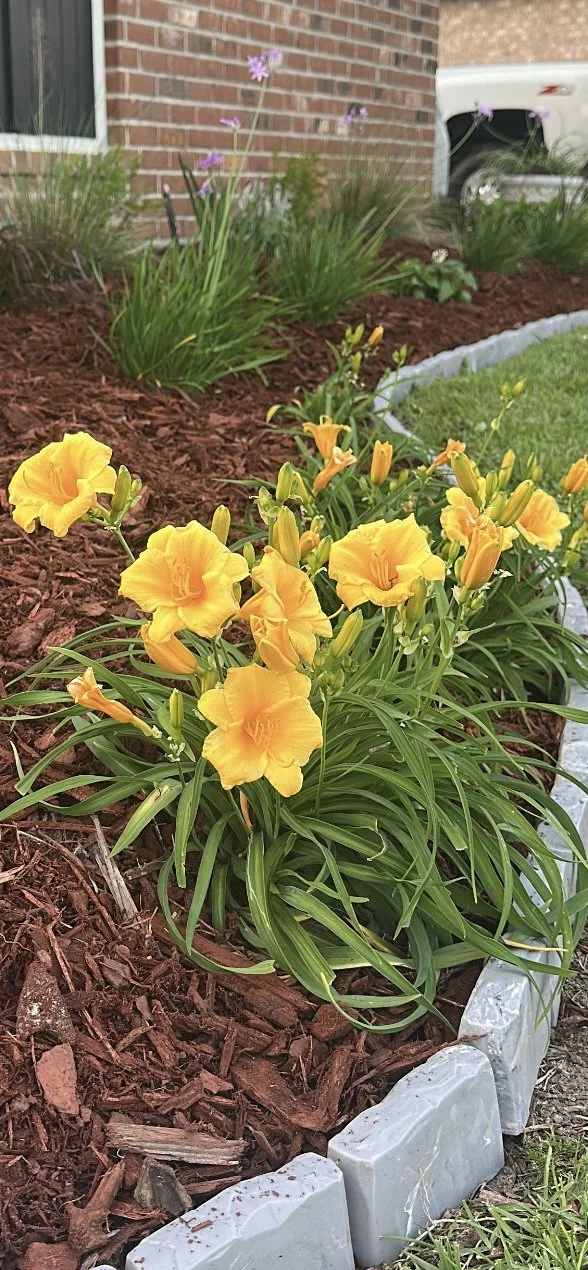
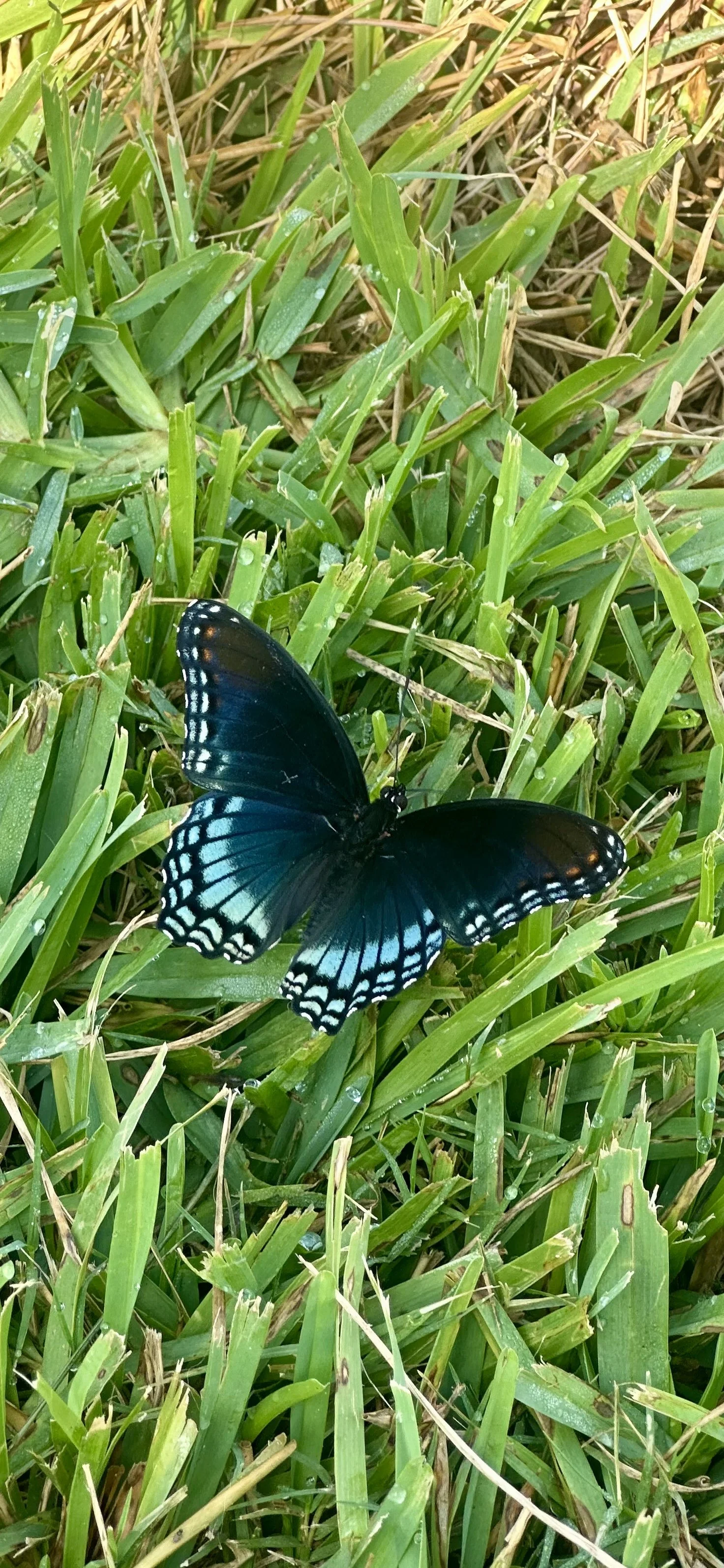
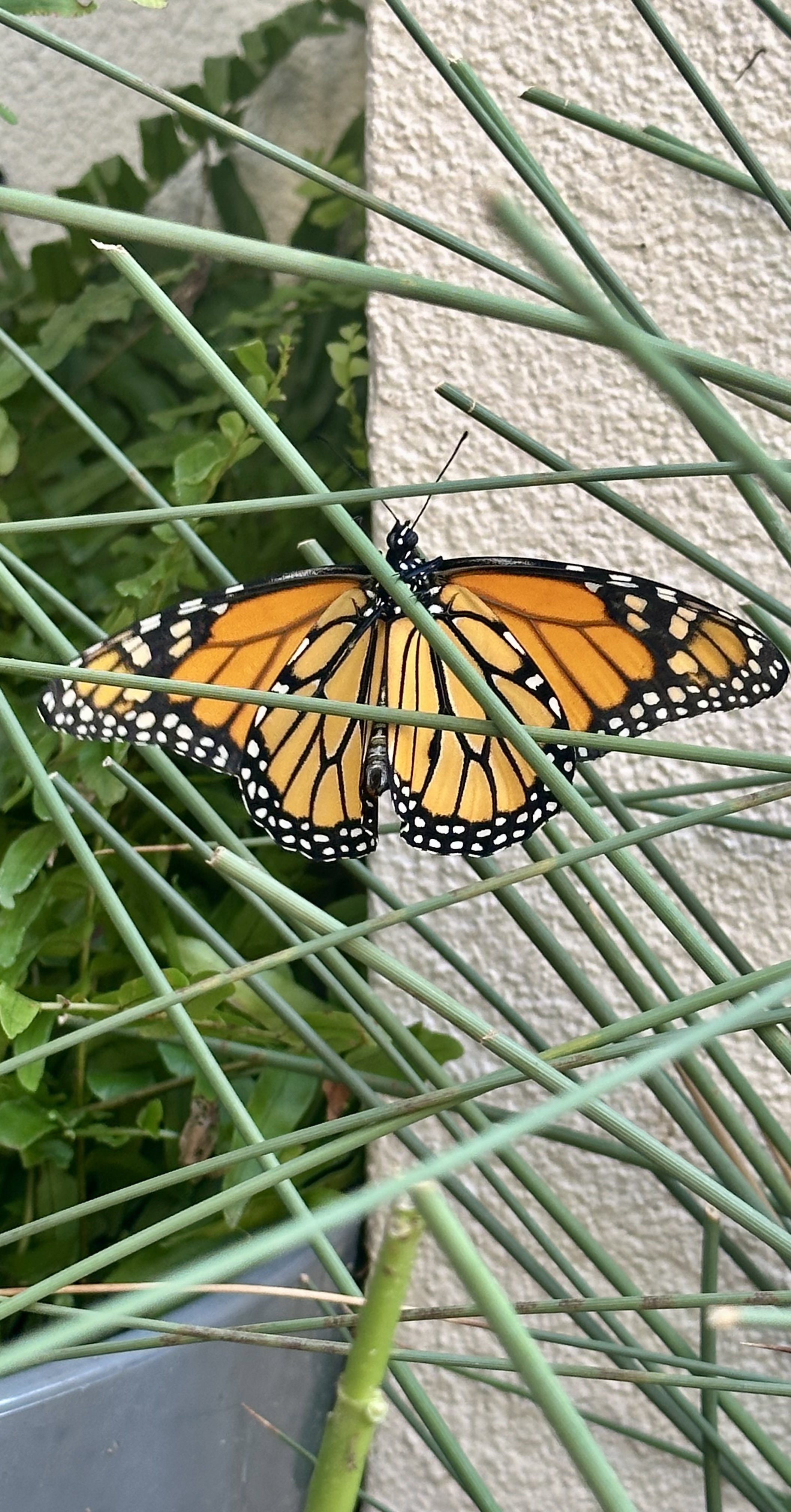
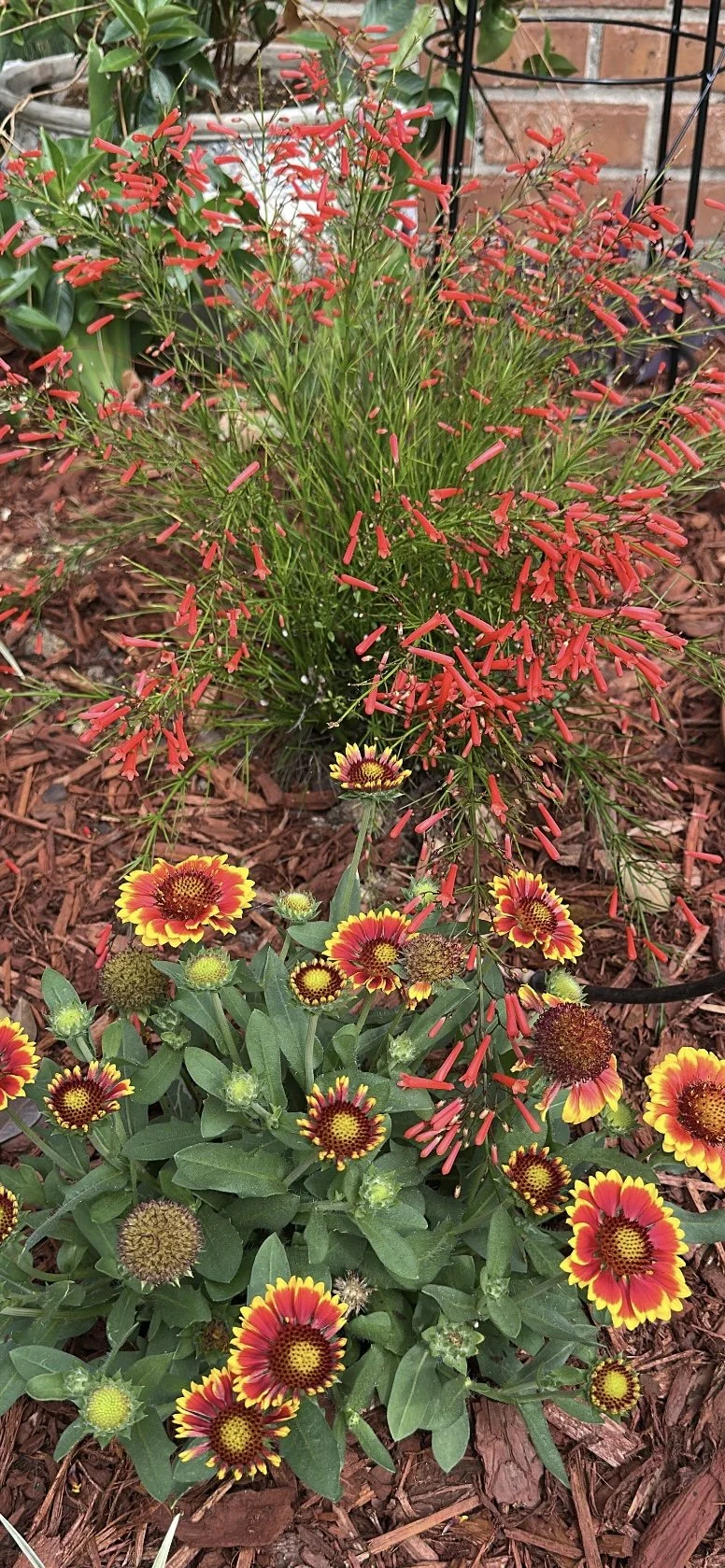
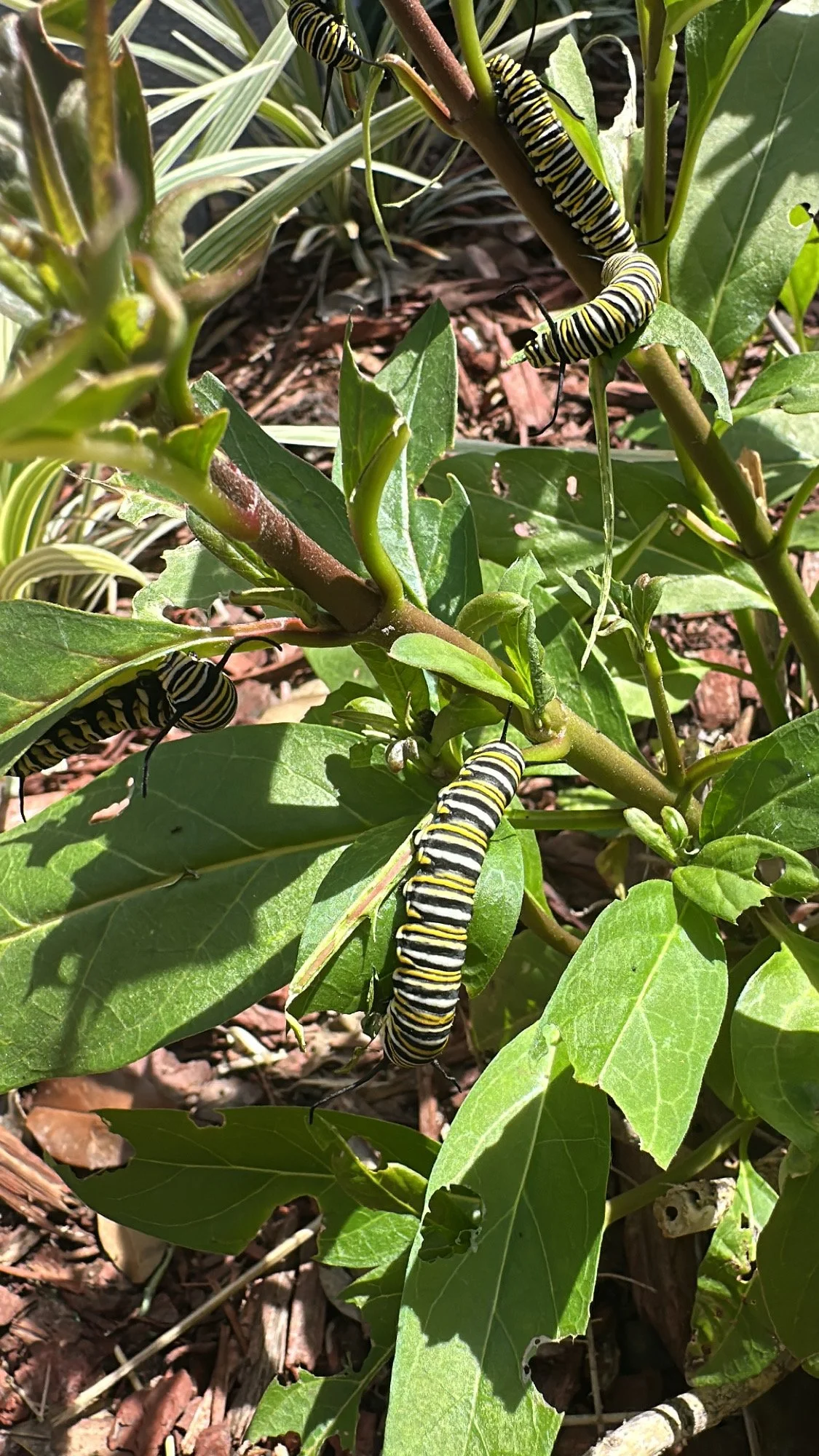
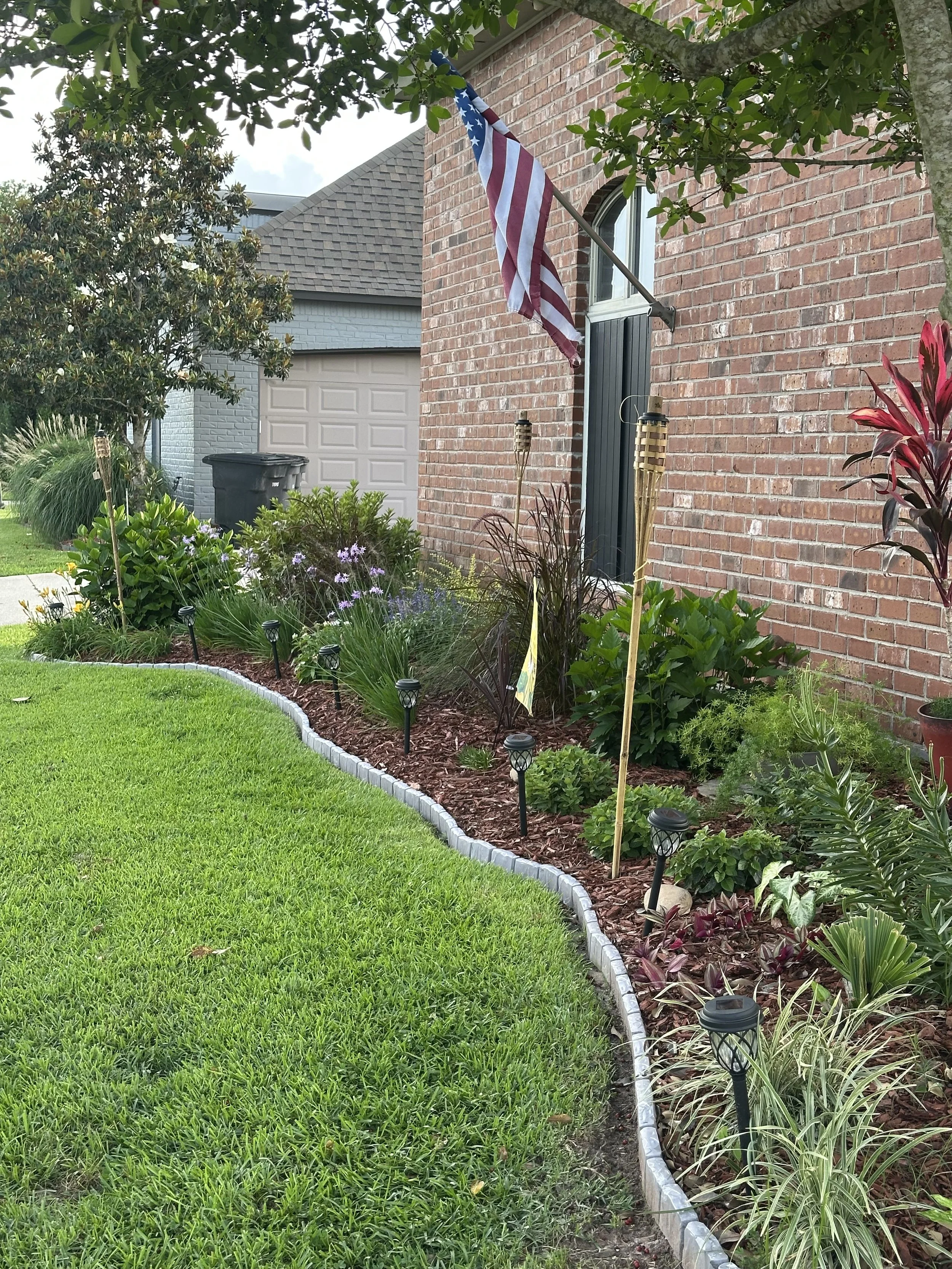
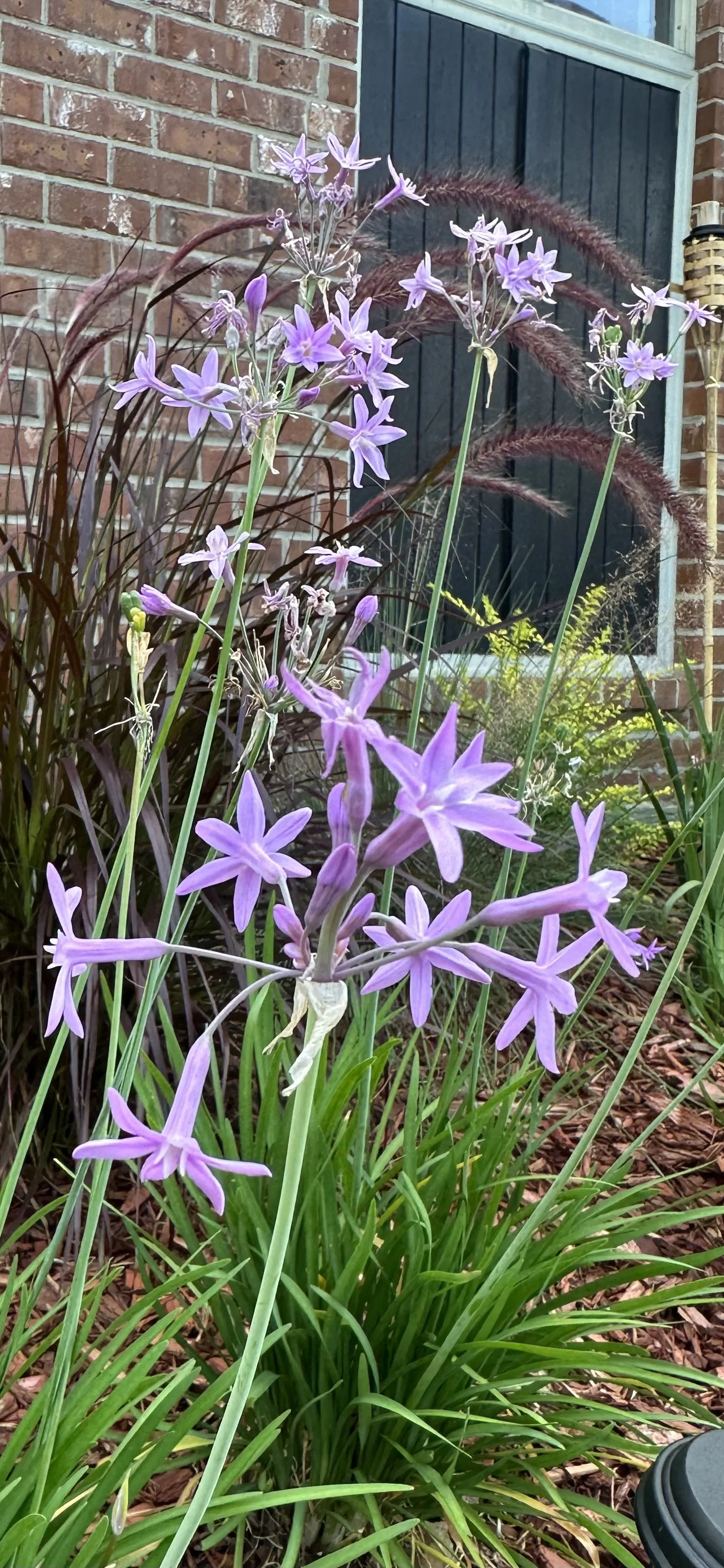
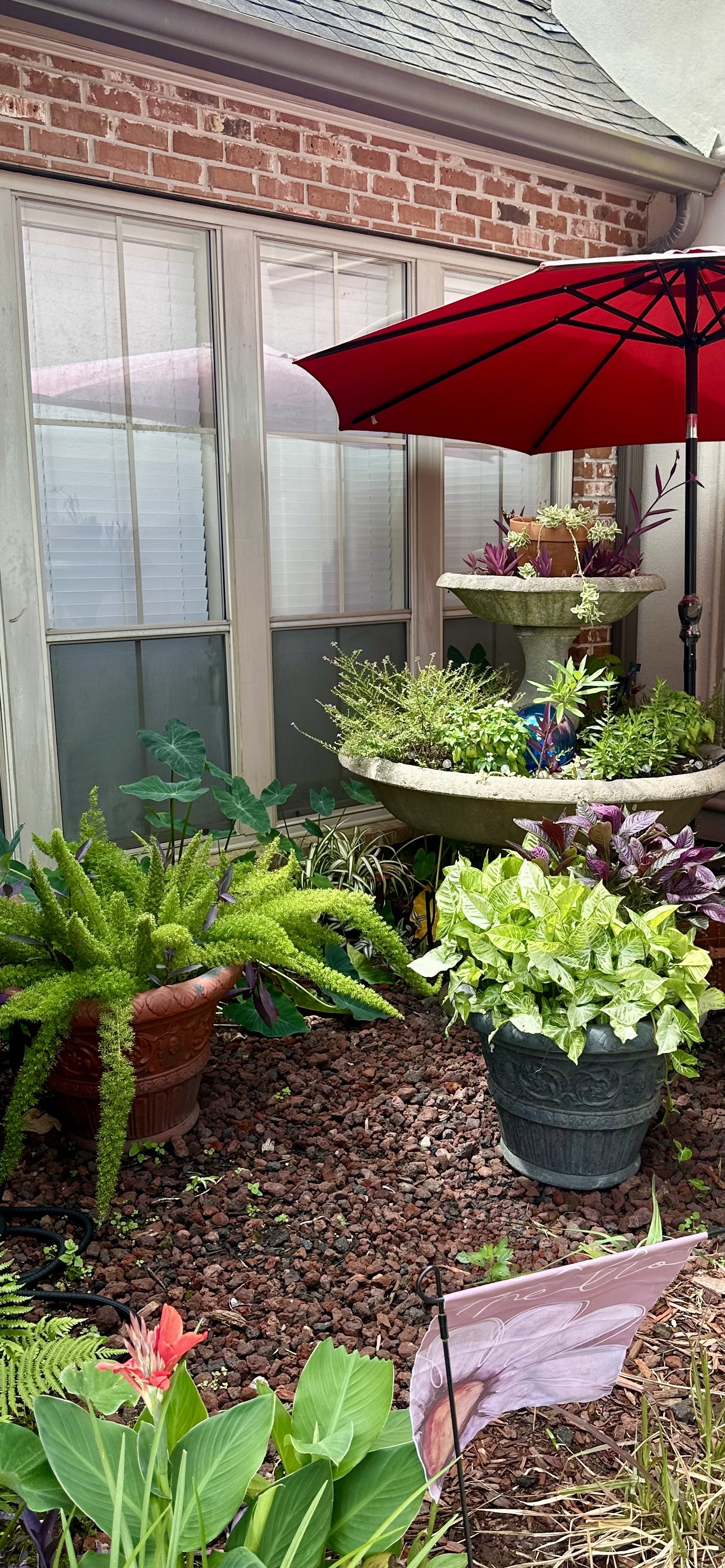
There is actually a concept in grief research called a “continuing bond”—the idea that our relationship with someone who has died can change rather than simply disappear. Remembering them, telling stories, looking at old pictures, or carrying pieces of what they taught us into our own lives can all be ways that relationship continues.
Maybe that’s what some of those posts have been for me all along. Not refusing to move on. Just making room for the people and animals I loved in the life that continued without them.
What I’m Taking from All of This
I can’t go back and determine exactly what caused every symptom I experienced. Was the brain fog COVID? Perimenopause? Grief? Stress? Lack of Sleep? A combination of it all? I’ll never know. But I don’t think I need to know anymore.
The questions I’m asking now are different: What has happened in my life? What has my body been responding to? What am I still carrying? And what would supporting myself look like now?
And I have been paying attention! I’ve made changes in how I eat, how I move, how I rest and recover, and how I approach my health in general. I’ve spent a lot more time learning about what’s actually happening in my body instead of getting frustrated with it. And my body is responding.
I’m feeling better than I have in years. I’m seeing positive changes. And most importantly, I feel like I’m finally at peace with my body instead of being at constant war with it.
Just as I can’t separate exactly how much of what I experienced was menopause, COVID, grief, lack of sleep, or everything happening at once, I can’t attribute feeling better to one single thing either. I’m taking care of the whole woman. Maybe that’s the bigger lesson. Our bodies don’t experience our hormones, our relationships, our losses, our sleep, our stress, our illnesses and our everyday lives separately. It’s all happening to the same woman.
And sometimes understanding what she’s been through—and paying attention to what she needs now—is a pretty good place to start.
If some of this sounds familiar, you might be realizing that your own body has been carrying more than you thought.
That’s part of why I created the 7-Day SHIFT—a simple way to start paying attention to your nervous system and building small practices that support it.
Want to learn more? Join the waitlist below and I’ll keep you updated as the details come together.
Let’s Talk About Fiber (And Not for the Reason You Think)
When you hear the word fiber, what’s the first thing you think? Probably digestion, right?
Or maybe one of those commercials that makes fiber sound like something you start worrying about when you hit a certain age. That’s what I always thought.
WAIT! If you’re about to make a quick exit because you don’t think this matters at your age, hang with me for a few minutes.
Yes, fiber helps keep things moving. But the more I learn about nutrition, the more I learn that digestion is only part of the story.
Fiber can play a role in how full you feel after a meal, your blood sugar response, cholesterol, your gut microbiome, and overall metabolic and cardiovascular health.
In other words, fiber deserves a little more attention than we tend to give it.
So…What Exactly Is Fiber?
Fiber is a type of carbohydrate found in plant foods that your body doesn’t fully digest. Unlike many other carbohydrates that are broken down and absorbed, fiber makes its way through the digestive system relatively intact.
And that turns out to be a very good thing.
There are two main types of fiber: soluble and insoluble.
Soluble fiber dissolves in water and forms a gel-like substance. You’ll find it in foods such as oats, beans, apples, citrus fruits, and some seeds.
Insoluble fiber doesn’t dissolve in water. It adds bulk and helps move things through your digestive system. Vegetables, whole grains, nuts, seeds, and the skins of many fruits and vegetables are good sources.
Most whole plant foods contain a combination of the two, so the good news is, you don’t need to keep track of which type you’re eating.
Eating a variety of fiber-rich foods will naturally give you a mix of both.
Fiber Does a Lot More Than Keep You Regular
This is the part I find fascinating. Fiber feeds many of the beneficial bacteria living in your gut. Certain types of fiber are fermented by those bacteria and produce compounds called short-chain fatty acids, which are involved in gut and metabolic health.
It can help you feel satisfied longer after a meal, which in turn might also help with that “Why am I looking for something else to eat an hour later” feeling. Pairing fiber with protein and healthy fats can make a meal more filling and may help reduce some of that between-meal snacking.
Certain soluble fibers can help lower LDL cholesterol. And diets rich in fiber-containing foods are associated with better cardiovascular and metabolic health.
Why I’m Particularly Interested in Fiber in Midlife
One thing I wasn’t familiar with is how connected our gut is to the rest of our body - including hormones. There’s actually something called the estrobolome, a collection of gut bacteria involved in how our bodies metabolize estrogen. (I had never heard of it either!)
This becomes especially interesting in menopause and post menopause, when our ovaries are producing much less estrogen and the relationship between our gut microbiome and the estrogen still circulating in our bodies may become increasingly important.
Certain types of fiber help feed the beneficial bacteria in our gut, supporting healthy and diverse gut microbiome. That gives me another reason to pay attention to how much I’m getting.
Fiber isn’t going to magically “balance” our hormones, but supporting our gut is one more way we can support our bodies as we move through midlife.
How Much Fiber Do We Actually Need?
Here’s where things get interesting.
For women, the general recommendation is about 25 grams of fiber per day through age 50 and 21 grams per day after age 50. But most of us aren’t getting that much.
And I think this is where it becomes useful to stop thinking about fiber as a number on a nutrition label and start looking at what’s actually on our plates.
Berries. Beans. Lentils. Avocado. Chia seeds. Flax. Oats. Vegetables. Nuts. Whole grains…they add up. You don’t necessarily need a special “high-fiber” product. You might just need more plants.
But Please Don’t Go From 10 Grams to 30 Grams Overnight!
If you’re currently eating very little fiber, suddenly loading your plate with all the things I mentioned above will leave you bloated, miserable, and swearing off plant foods all together. Your digestive system — and the microbes living there — need some time to adjust.
I also noticed a slight headache later in the fast, which is probably because I hadn’t properly hydrated. And I quickly realized that moving those pavers was probably NOT the thing to do while fasting!
Perhaps the biggest thing I noticed was this: I am so much more focused and accountable when I have a plan than I tend to be when I don’t.
What This Can Look Like in Real Life
You don’t have to redesign every meal. Simply add berries and chia or ground flax to something you’re already eating. Add beans or lentils to a soup or salad. Choose the apple instead of the juice. Add some avocado to a meal. Swap a refined grain for a whole grain sometimes. Throw another vegetable onto your plate.
Small changes over time and repeated consistently…that’s where nutrition starts to look less like a diet and more like simply take care of yourself.
What if You Hate Vegetables?
I get it. Not everyone likes vegetables (my best friend won’t eat anything green). In all the years that I've coached women in fitness and nutrition; that’s one of the biggest objections I got. But you don’t have to live on broccoli to get enough fiber. I’ve mentioned other options above, but even with good intentions, getting enough fiber from food every day can be difficult. That’s where a fiber supplement may be useful.
I still believe that food should do most of the heavy lifting when possible because whole foods give us much more than fiber alone — but a supplement can fill the gap.
If you decide to add one, remember to ease into it. More is definitely not better in this case! Make sure you’re staying hydrated. If you take medications or have digestive issues, talk with your healthcare provider or pharmacist first because some fiber supplements can affect medication absorption or may not be appropriate for everyone.
Side note: for your hydration needs, if you’re looking for something more than water, I recommend Hydrated by Make Wellness. I drink 2-3 every single day. You can check it out here.
One More Thing I’m Learning in Midlife
Healthy eating doesn’t have to involve some big plan, more rules, more restrictions, more things I wasn’t supposed to eat.
Sometimes improving our nutrition isn’t about taking something away. It’s about asking: what could I add? More protein, more plants, more fiber, more foods that actually nourish me and help me feel good. And fiber is a pretty simple place to start.
Want an Easy Way to Add More Fiber?
Knowing you need more fiber is one thing. Standing in your kitchen wondering how to get more of it into your day is another.
So, I put together a simple Fiber Guide that explains why fiber matters, how much you need, the different types of high-fiber foods, and simple ways to start adding more.
No overcomplicating it. Just another tool to help you better understand what your body needs and put what you’re learning into practice.
Grab your free Fiber Guide here
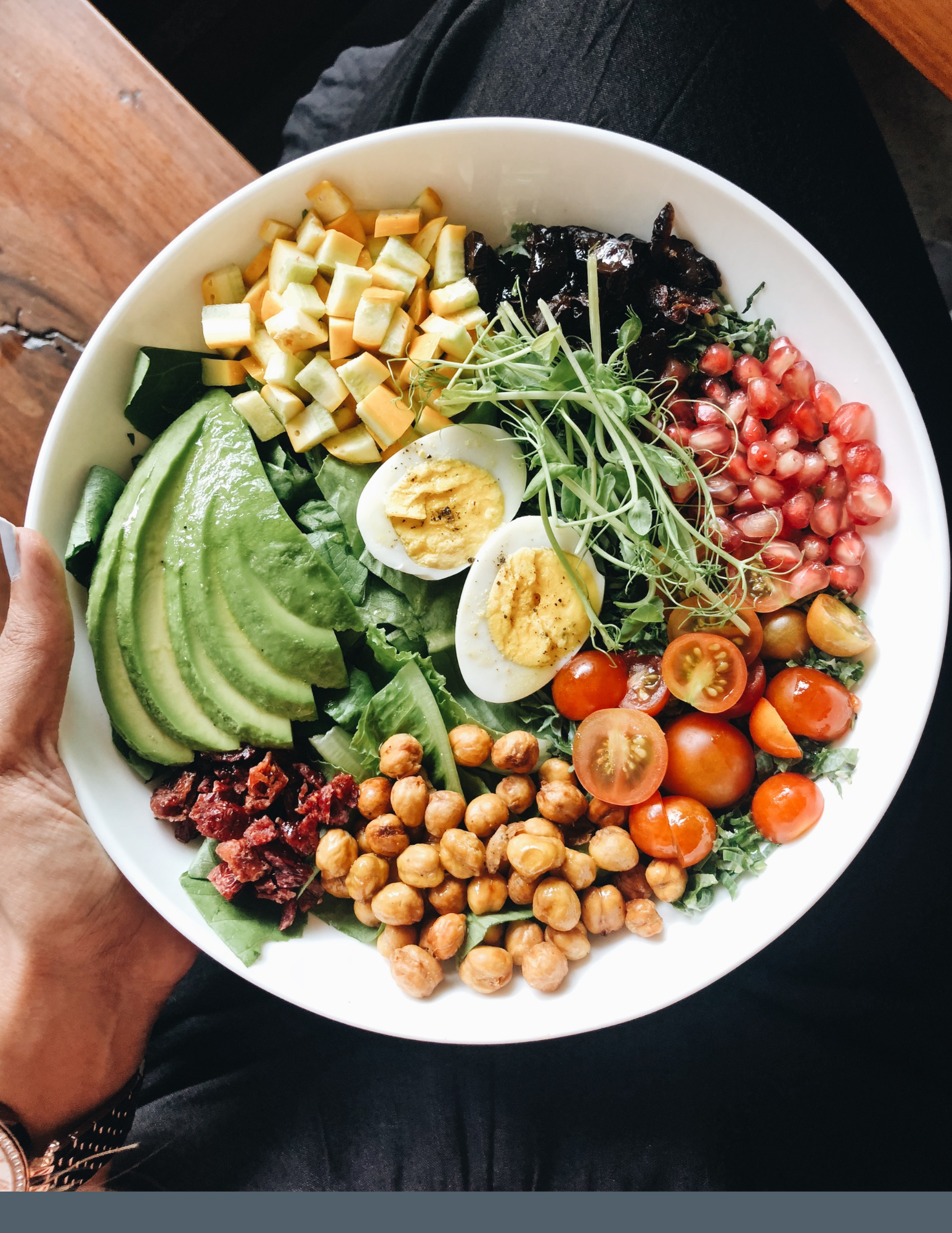
Fiber Forward!
Building my plate with plenty of fiber in mind — plants, color, healthy fats, and plenty of variety so I don’t get bored!
Curious About What Works for Your Body?
You don’t have to start with a 48-hour fast. In fact, I have something much simpler coming soon.
The 7-Day Shift is for women in midlife who are tired of feeling frustrated with their bodies and want to finally understand why things are happening the way they are, and what they can do about it. I’ll be sharing more about that very soon!
What a 48-Hour Fast Taught Me About…Me!
I just completed a 48-hour fast.
To some that might seem a little extreme, but you have to understand the reason behind it before you go there.
Since becoming a fasting coach, I’ve been working my way through different fasting protocols so I can experience them for myself.
I can read about fasting. I can study the science. I can take courses and learn the protocols, but if I’m going to coach women through this someday, I also want to understand what it actually feels like to do it.
So, this time, I wanted to see what 48 hours would teach me.
Why 48 Hours?
Part of this was simply curiosity. I wanted to pay attention to what happened with my hunger, energy, mental clarity, and relationship with food as the hours went by.
Would I suddenly get that amazing mental clarity people talk about?
Would my energy increase?
Would I spend two days dreaming about food?
And since I’m experiencing these fasts for myself, this was another opportunity to learn what my body does rather than assuming everyone experiences fasting the same way.
Turns out, that may have been one of my biggest takeaways.
Did I Feel Amazing?
Here’s the part that probably isn’t going to make a very exciting fasting commercial:
I didn’t experience some dramatic surge of energy during the fasting period, like many people do, but as I write this almost 30 hours since completing the fast, I feel energetic. I intentionally chose not to workout during the 48 hours and gave my body permission to rest. Today I feel well-recovered - I guess the true test will be when I go workout this afternoon.
My brain didn’t suddenly become sharper than it normally is, and that’s one of the biggest things I was hoping to experience. That doesn’t mean fasting can’t help with brain fog. It simply reminded me that every body is different, and we may not all experience the same benefits — or experience them at the same time.
We hear so much about what we’re supposed to feel when we’re doing something for our health that sometimes we start looking for an experience that may or may not happen.
My experience was simply my experience, and that’s useful information too.
What I Did Notice
I did drop a few pounds, but what surprised me most wasn’t necessarily physical. It was how much easier things felt when the decision had already been made.
I wasn’t deciding what to eat.
I wasn’t wondering whether I was hungry enough to eat.
I wasn’t walking into the kitchen and negotiating with myself.
The boundary was clear: I’m fasting.
There was something incredibly freeing about that. Fewer decisions. Clear boundaries. And maybe most importantly, proving to myself that I could do something I had decided to do.
Hunger surprisingly showed up pretty early, but it also disappeared. Instead of sitting there fixating on what I was missing out on, I got up and moved. Gardening gave me something I enjoyed doing, and helping move brick pavers definitely kept my mind occupied.
I also noticed a slight headache later in the fast, which is probably because I hadn’t properly hydrated. And I quickly realized that moving those pavers was probably NOT the thing to do while fasting!
Perhaps the biggest thing I noticed was this: I am so much more focused and accountable when I have a plan than I tend to be when I don’t.
That lesson extends far beyond fasting.
And Then Came the Food…
One thing I’m learning is that completing the fast is only part of the experiment. How I come out of it matters too.
Rather than finishing 48 hours and immediately celebrating with everything I hadn’t eaten for two days (hello gummy worms), I intentionally reintroduced food.
And then the next morning, I built my first full meal around protein, fiber, healthy fats, fermented foods, and whole-food carbohydrates. And yes…food tasted REALLY good!
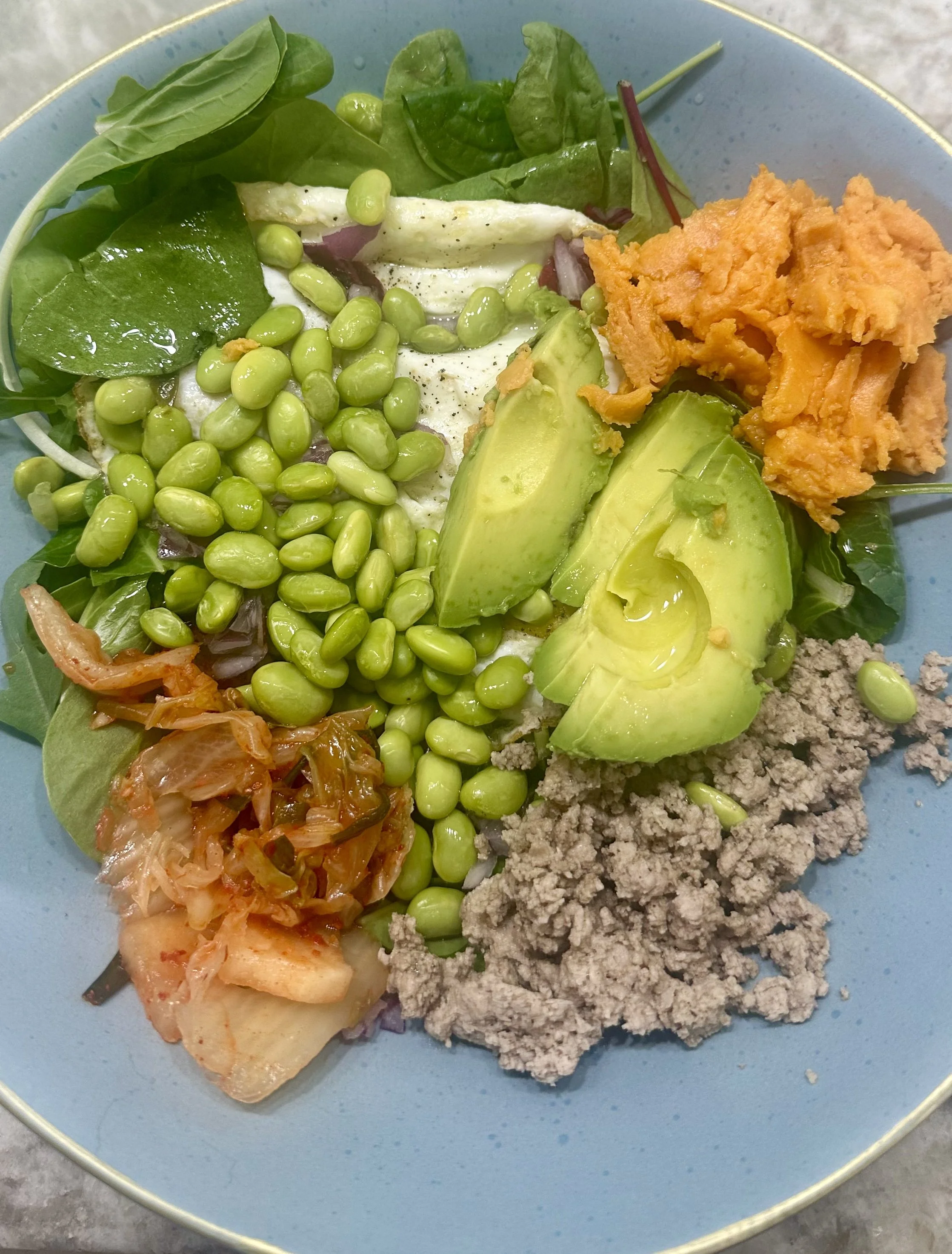
Protein Forward!
Ground turkey, edamame, kimchi, eggs, spinach, sweet potato, avocado
But there was something different about sitting down to that meal with intention instead of treating the end of a fast as permission to go crazy.
I knew what I wanted on my plate and why it was there.
Especially Here in the South…
Food isn’t just fuel.
It’s birthdays and holidays. It’s Sunday dinners and backyard cookouts. It’s bringing somebody food when they’re having a hard time. It’s gathering around a table with people you love.
It’s how we celebrate, comfort, gather, and connect.
I grew up with a mom who baked, owned a bakery, and a small catering business. I worked for her when I was 15. There was always something being cooked, baked, or shared. Food was simply part of life, and I love that.
I don’t want wellness to mean losing that part of my life.
But fasting has made me more aware of how often we eat because food is there, because it’s time, because we’re celebrating, because we’re bored, or because eating is simply what we’ve always done.
There’s a difference between enjoying food intentionally and eating automatically.
I’m learning that difference.
My Biggest Takeaway
I went into this wondering what a 48-hour fast might do for my body.
I came out of it thinking just as much about what it taught me about my mind.
I like having a plan. I’m more accountable when I know what I’m doing and why I’m doing it. Clear boundaries actually make things easier for me—not harder.
And sometimes the win isn’t a number on the scale, a ketone reading, or some dramatic burst of energy.
Sometimes it’s simply realizing I said I was going to do something, and I did it.
So…Would I Do It Again?
Yes. Not because I think everyone needs to fast for 48 hours. And not because I had some magical experience during those two days.
I’d do it again because I’m learning. I’m learning about fasting. I’m learning about my body. I’m learning about my relationship with food. And I’m learning which tools I may eventually use when I’m coaching other women through midlife.
I’m going to keep experimenting, learning, and paying attention to how different fasting strategies feel in my own body.
Not because every woman should fast exactly the way I do. Quite the opposite.
The more I learn, the more I realize that there isn’t one perfect fasting schedule—or one perfect way to navigate midlife.
The goal isn’t to find the perfect plan. It’s to understand your body well enough to find what works for you.
Until next time,
Melissa
Curious About What Works for Your Body?
You don’t have to start with a 48-hour fast. In fact, I have something much simpler coming soon.
The 7-Day Shift is for women in midlife who are tired of feeling frustrated with their bodies and want to finally understand why things are happening the way they are, and what they can do about it. I’ll be sharing more about that very soon!
I Didn’t Need Another Planner…I Needed a Better System
I’ve never had trouble with creativity or dreaming big.
The hard part for me has always been finishing whatever I started.
I’d jump from one idea to the next, convinced thisidea - or this business - was the right one. The one that would finally make sense and work. I was trying to build three different businesses at once, constantly switching gears, always busy, yet never feeling like I was making meaningful progress in any of them.
At the end of the day, I often felt like a failure.
Have you ever felt that way?
Looking back, motivation was never the problem. Focus was.
In several blog posts, I’ve mentioned my trip to Utah a few months ago that became a turning point for me.
That trip changed the way I think about the future.
I stopped asking “What do I need to get done today?” and started asking, “Who do I want to become?” That one question changed everything.
I realized I wanted more than just another accomplishment - or my name on another leaderboard. (Although, let’s be honest…I do love seeing my name on a good list!).
I wanted to build a healthy, intentional life that would allow to enjoy the years ahead with my husband. I picture us building our home in Tennessee, traveling, staying active, and having the energy to fully embrace whatever comes next.
That shift changed more than my goals. It changed my mornings. And my mornings changed my days.
After retiring from years of 3am alarms to teach fitness classes, I suddenly had the freedom to sleep as late as I wanted. As wonderful as that sounded, I found it too easy to let my morning get away from me.
So, I still set an alarm. Not for 3am anymore, but for 7am. You can’t see it but just know that I’m smiling about that!
That one decision became the beginning of a completely different morning routine.
And instead of reaching for my phone first thing, I started reading.
Instead of scrolling, I started thinking.
Instead of reacting to my day, I started creating it.
Those small changes in my morning routine led to something unexpected.
Have you heard of the book The 12 Week Year? Ironically, I’ve owned the book for years but never actually read it. There’s another example of me starting something but not finishing! But this time my “why” was different. When I bought the book years ago, I wasn’t the woman I am today.
I loved the idea of focusing on the next 12 weeks instead of an entire year. Suddenly, big goals felt manageable and everyday has a purpose instead of just another to-do list.
The book challenged me to think differently about how I spent my time.
For years, while I was working for someone else, I’d dream about what I’d do if I could control of my own schedule.
Well…now I finally could.
And I quickly realized that freedom without a plan isn’t truly freedom at all.
I don’t naturally love structure. Or following rules. But I craved organization, so if I wanted a different life, I had to stop doing the same things that kept me stuck.
As I started writing things down, a system began to emerge. But my system was scattered ideas written in multiple notebooks, sticky notes stuck to my desk, random pages in a planner I rarely opened.
That wasn’t a system. It was organized chaos.
I needed a system, so I created one that works for me.
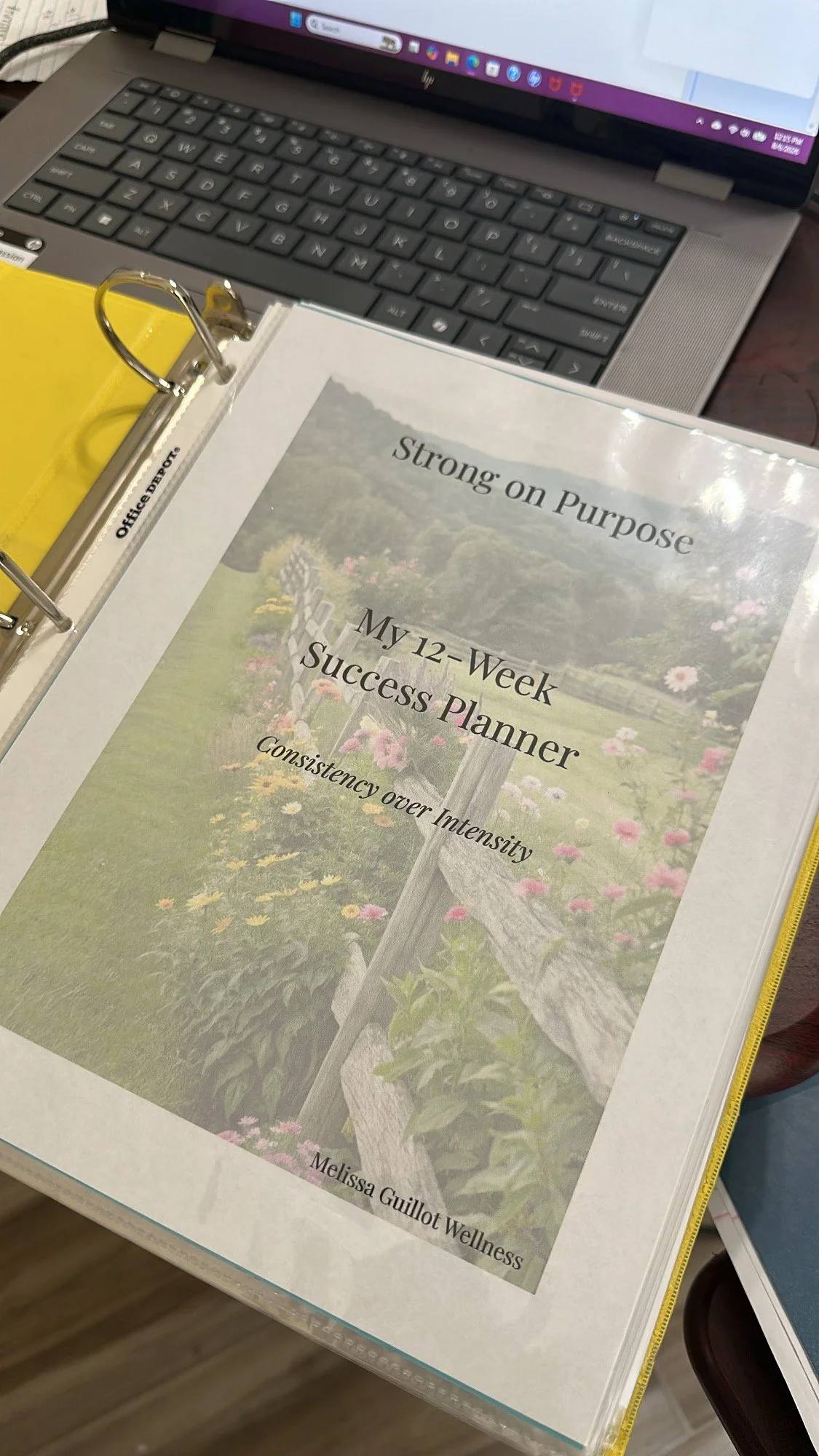
The planner didn’t make me productive. FOCUS did.
One that helped me identify the few things that mattered most each day instead of chasing an endless to-do list.
I can’t begin to tell you the difference that has made. For the first time in a long time, I feel like I’m moving forward instead of just staying busy.
I’m writing a blog post every single week - something I have wanted to do for YEARS!
My newsletters are planned ahead of time instead of thrown together at the last minute.
I know exactly what my priorities are each week, and I take time to review what’s working and what isn’t.
Instead of trying to build everything at once, I’m intentionally creating health and wellness programs that best align with my purpose and the women I want to serve.
The planner didn’t make me productive.
FOCUS did.
The planner simply gives that focus a place to live every day. And when you become focused, you become intentional. When you’re intentional, productivity follows.
I’ve also learned that success isn’t about saying yes to every opportunity that comes your way.
This year, I made the intentional decision not to pursue a goal that had been one of my biggest accomplishments last year. It wasn’t because I wasn’t proud of it or because it wasn’t worth earning. It was because I wanted to give more of my time and energy to building the future I truly see for myself.
Sometimes growth isn’t about adding more.
Sometimes it’s about protecting what matters most.
Today, productivity means something completely different to me. It’s no longer about checking off the most boxes. It’s about making sure the things I do each day actually move me toward the life I’m trying to build.
It’s about making sure the things I do each day move me closer to the woman I’m becoming.
Menopause is not about shutting down and shying away. It’s about kicking in the door and declaring “I’ve Arrived!
Ready to become more intentional?
If you’ve ever felt busy but not productive, I hope this encourages you to pause and ask yourself one simple question:
“Is the way I’m spending my time helping me become the person I want to be"?”
That question changed everything for me.
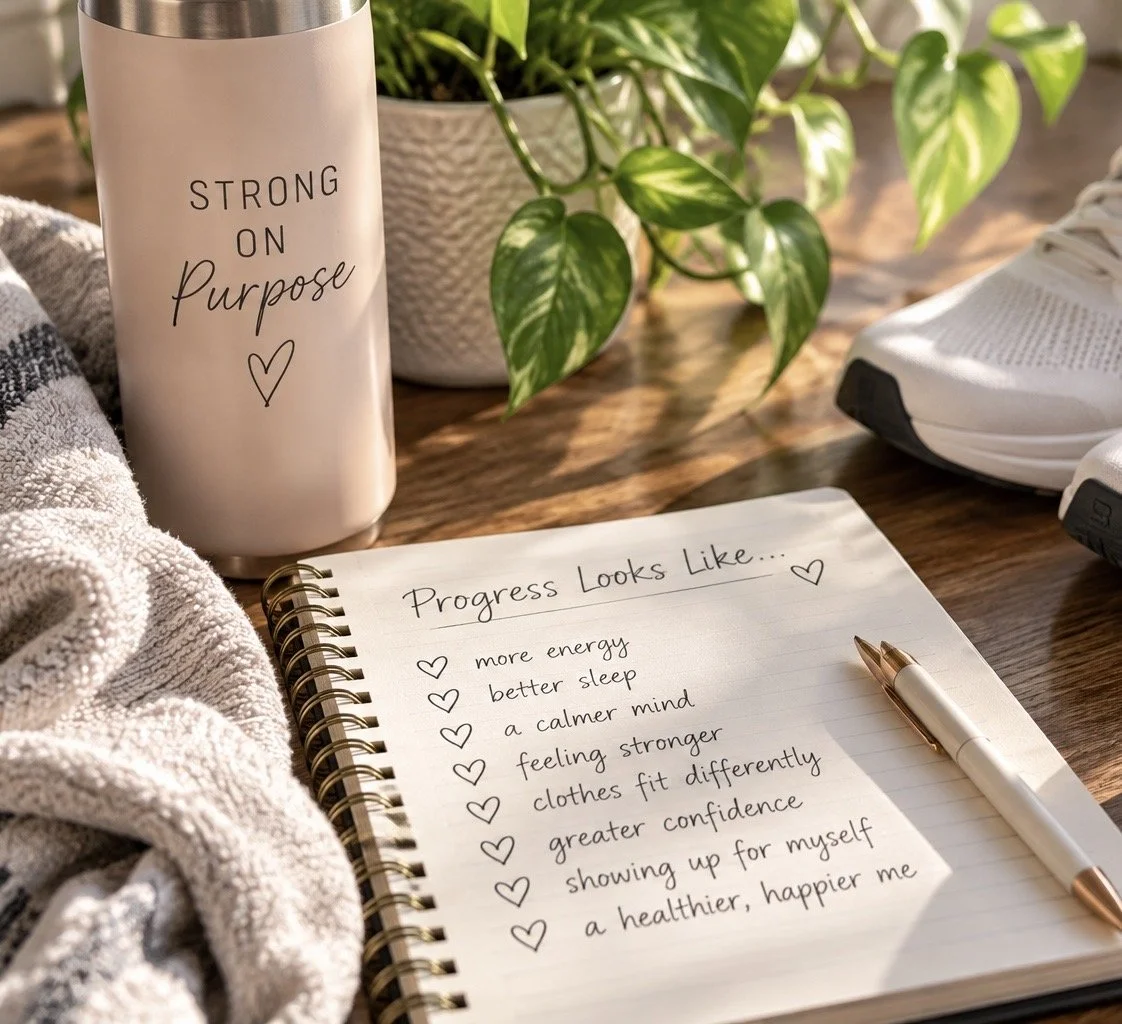
The Best Result Had Nothing to Do with the Scale
Around day 10 of my first experience with the Burn Fat Like a Girl program, I realized something that had me asking “Did I just ruin this whole thing?”
For over a year, my morning routine has been non-negotiable. First thing every single day, I take my natural oral peptides the exact same way. They have been a staple for my overall wellness. So, when I started this program, I didn’t alter my routine. But then as I started learning more and more, the science clicked. Peptides are literally just short chains of amino acids. So, by swallowing my morning supplements, I was accidentally sabotaging the exact health benefits I was fasting for!
Before I go any further, let me explain why I decided to do this program. I’m not fasting for esthetic purposes. If I shed a few lbs. and tighten up my menopause belly in the process, I won’t be mad about it!
I’m doing it for the health benefits, such as gaining energy, clearing brain fog, reducing inflammation, slowing down the signs of aging, to name a few.
I chose the beginner plan, which meant six days of intermittent fasting (IF), where I wouldn’t eat for 13-15 hours each day, plus one 24-hour fast per week. I had chosen 15 hours simply because I had already completed longer fasts and knew it was realistic for me. I wanted my first attempt to be successful - and I also wanted to make sure this was a program a brand-new client could confidently follow, since I’ll be guiding women through my signature fat-burning program soon!
So, back to my realization…I was almost to the finish line and I was thinking “Well…did I just ruin the whole thing?”
Not too long ago, I would have thrown in the towel. I would have convinced myself I’d already messed up, so why keep going? I probably would have dove into the giant jar of gummy worms that I had been successfully avoiding since winning them at a baby shower the weekend before.
But this time was different.
I finished all 14 days without cheating with sugar or processed foods - not once, and honestly, I’m proud of that. Just because I’m a trainer and a health coach and I work out almost every day, doesn’t mean that I’m not human. I have my weaknesses too.
I didn’t finish it because I wanted a lower number on the scale, or because I wanted to prove that I had perfect willpower. It’s because my goal is bigger now. Ever since coming back from Utah and thinking about my future self, my motivation has changed. I’m investing in the quality of my future.
In the coming years, we’ll be building our forever home in the beautiful Tennessee mountains. I want to be strong and healthy enough to enjoy every part of that season of my life. I never thought I’d have that kind of life. I am blessed and will not take that for granted. I want the energy to work alongside my husband, hike the property with Journie, and enjoy the life we’re building together - not worried about if my body can keep up.
The biggest victory from those 14 days wasn’t whether my fast was perfect. It was realizing that one imperfect decision - even one repeated over several days - doesn’t mean the journey is over.
Progress isn’t built by being perfect. It’s built by continuing.
If you’ve ever quit because you thought you had already blown it, I hope my story encourages you. You don’t have to be perfect to make progress. You just have to keep going.
Ready to Become a Better Fat Burner?
I’m starting my signature Strong on Purpose fat burning program later this summer! If you’re curious about learning how fasting can fit into a healthy lifestyle - and want to focus on progress instead of perfection - I’d love for you to be one of the first to hear when enrollment opens.
Why I Became a Fasting Coach…
If you had asked me 5 years ago where my career would lead, becoming a “fasting coach” wasn’t even on my radar.
My passion had always been helping women become stronger.
As a personal trainer and group fitness instructor, I had the privilege of encouraging women to get stronger, move more, and believe in themselves. Watching women gain confidence—both physically and mentally—was one of the most rewarding parts of my career.
As my interest in nutrition grew, I became a certified sugar detox coach. I saw firsthand how reducing sugar could positively impact energy, cravings, and overall health. Many women experienced great results.
But I also noticed something.
For many women, following a very structured, very strict, nutrition plan felt difficult to sustain once the program ended. It was always the same - there was hope and then there wasn’t. As a coach, that was hard to witness. Although detoxing from sugar is a smart health decision, I learned that it’s not really about the sugar. It’s about lifestyle choices.
A few years later, as I was entering menopause and experiencing changes in my own body, I became so frustrated! Why were the things that had always worked before not working anymore? Instead of accepting that as “just part of getting older,” I became curious. I wanted to understand what was happening beneath the surface. Why did weight loss become harder?
About that time, a friend told me about natural bioactive precision peptides and the more I learned, the more it started to make sense. There was a better way to support my body instead of trying to fight it. As I explored how the body communicates and adapts, it opened the door to another fascinating discovery—fasting as a lifestyle.
As I learned more about fasting, I realized it wasn’t what I had always assumed.
Like many people, I thought fasting meant starving myself or losing my hard-earned muscle muss. Then I discovered there isn’t just one way to fast. There are different approaches, different goals, and different ways to tailor fasting where you are in life.
What grabbed my attention the most wasn’t simply the possibility of weight loss. It was learning how fasting could support the body’s natural processes when used intentionally - just like with peptides. It was all starting to come together!
For me, it wasn’t about another diet. It was about understanding my body instead of fighting against it.
The more I learned, the more I wanted to learn. I found myself studying, reading, listening to experts like Dr. Mindy Pelz, and seeing how fasting could fit into a healthy lifestyle rather than becoming another restrictive plan to follow.
That’s when I knew I wanted to become a certified fasting coach.
Not because I believe fasting is for everyone. It’s not.
But because I know what it feels like to search for answers when your body has changed, and I want to help other women navigate that journey with education, encouragement, and a personalized approach.
Today, I’m still learning. The research and science behind fasting are always evolving, so I will always be learning and growing with it. And I’m excited to begin coaching women who want to explore their health - especially during the seasons of life when the old approaches don’t seem to work anymore.
If you’ve been feeling frustrated, discouraged, or like your body has changed and no one can explain why, I hope you’ll follow along. This is a new chapter for me, and I’d love for you to be a part of the journey.
Ready to Become a Better Fat Burner?
I’m opening my first Strong on Purpose Fat Burner Program later this August! If you’re curious about learning how fasting can fit into a healthy lifestyle, I’d love for you to be one of the first to hear when enrollment opens.
Connection Is Part of Wellness Too…
For years, I welcomed women through the doors of gyms - sometimes my own, sometimes someone else’s - but the goal was always the same: to help them become stronger.
Today, that mission hasn’t changed. I’ve simply expanded what “strong” means.
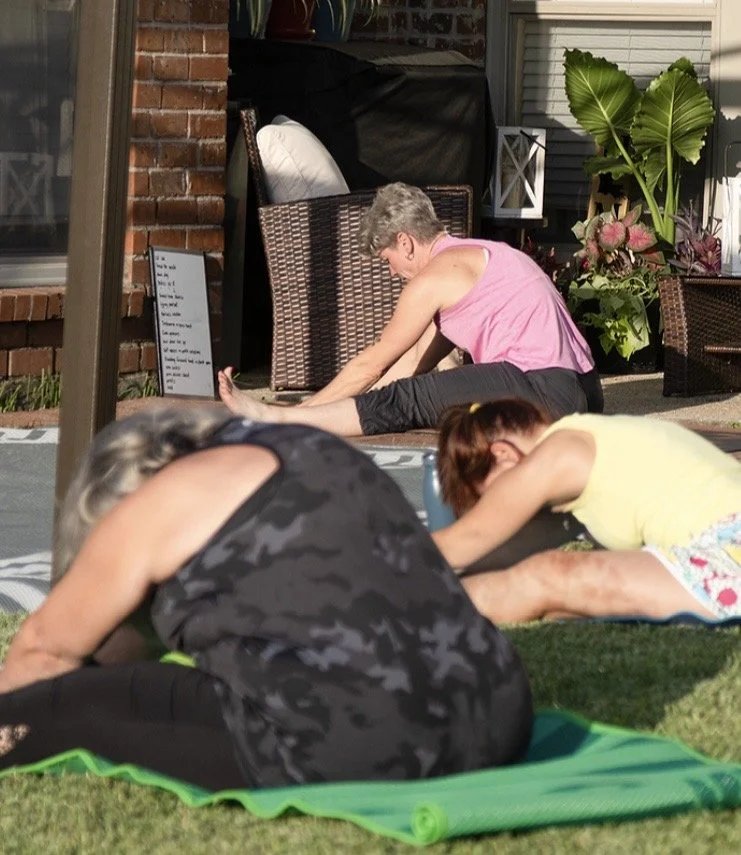
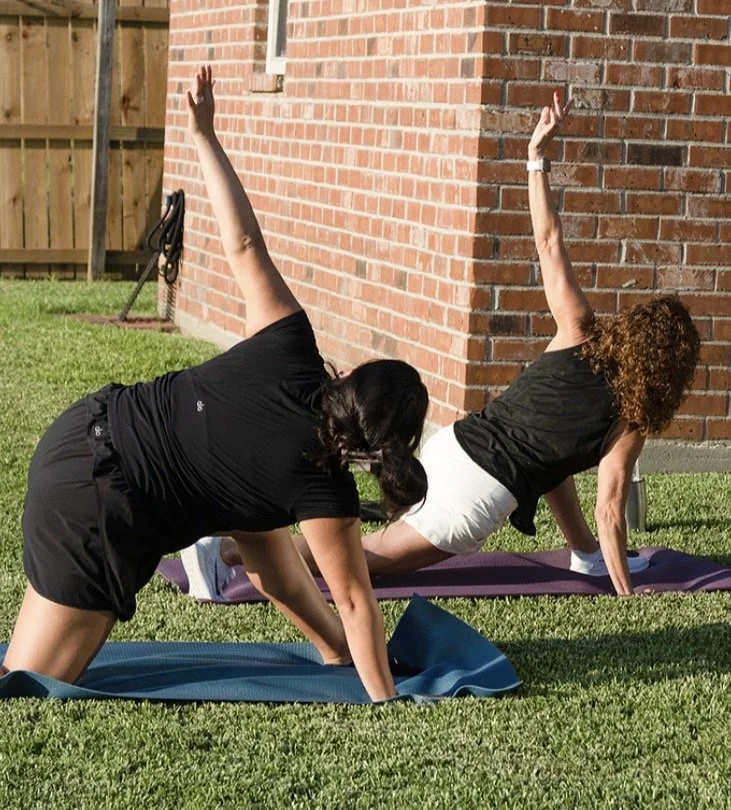
A few weeks ago, I invited a group of women to my backyard and kitchen for an evening I called Stretch, Sip, Reset.

On the surface, it looked like stretching, good food and drinks, and good conversation. But what I was really creating was something many of us need even more as we get older: Community. This is exactly what so many women need right now.
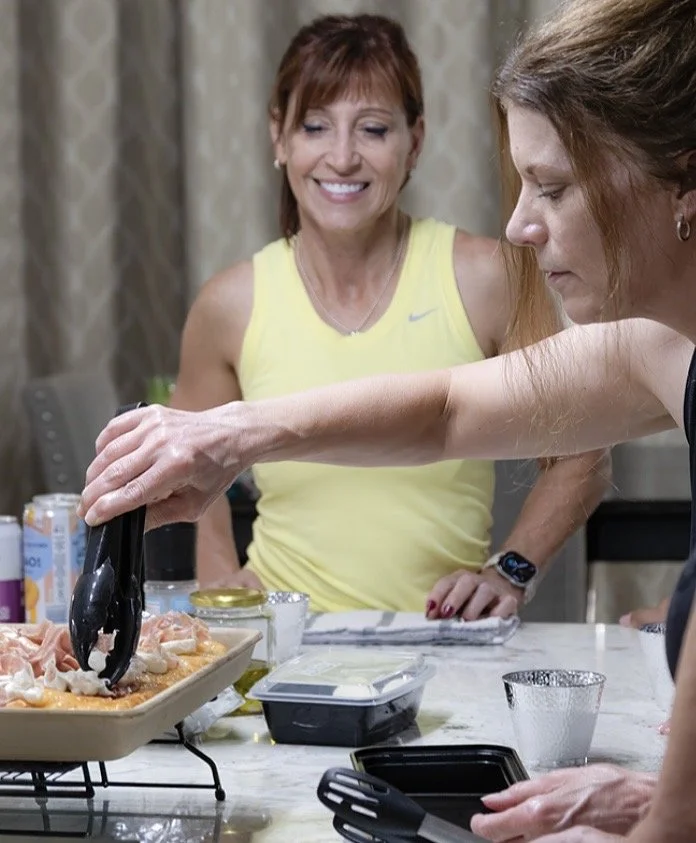
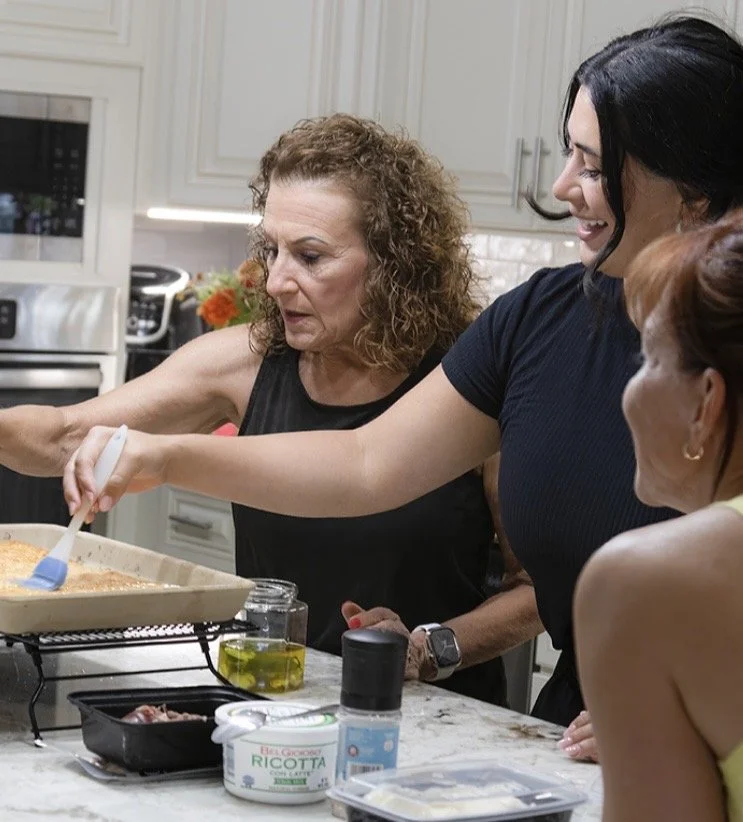
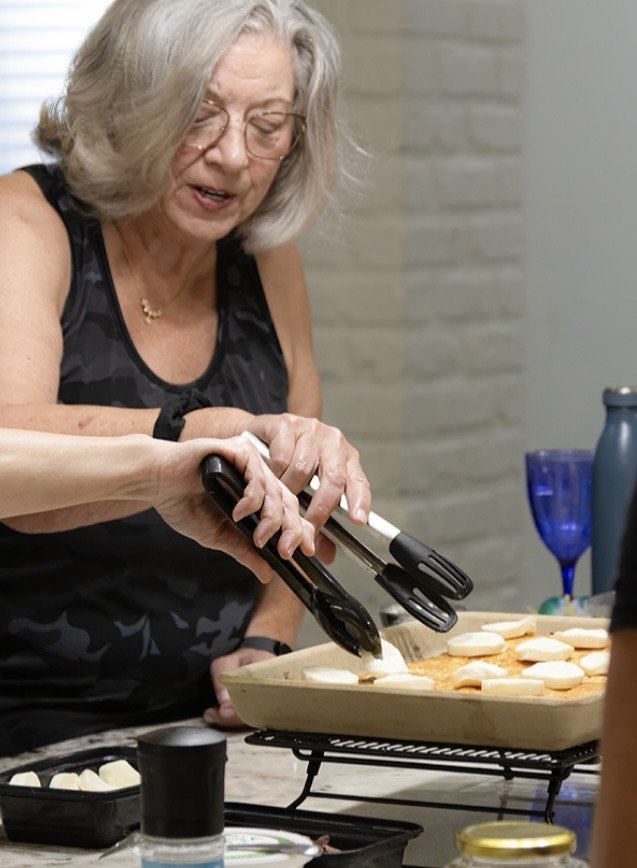
As we move through perimenopause and menopause, our estrogen naturally declines. Dr. Mindy Peltz often talks about how estrogen doesn’t just affect our reproductive health—it also interacts with important brain chemicals like dopamine, serotonin, GABA, and oxytocin.
Those chemicals help influence motivation, joy, calm, connection, and our ability to handle stress. So if you’ve ever found yourself feeling…
Less motivated.
More anxious.
More overwhelmed.
Or simply more isolated than you used to…
You’re not imagining it. Your body is changing.
And while we can’t completely stop those changes, we can support ourselves in healthy ways. One of the most powerful ways is surrounding ourselves with other women. Being around women who encourage you, laugh with you, listen without judgment, celebrate your wins, and remind you that you’re not doing this alone.
We often think wellness means finding the perfect workout or eating the perfect diet. Those things matter, but so does having people in your corner.
That’s what I want Stretch, Sip & Reset to become. Not another fitness class, not another obligation. A place where women can breathe, connect, learn, laugh, and leave feeling just a little lighter than when they arrived.
If this sounds like something you’ve been craving, I’d love to have you join us at our next Stretch, Sip, Reset. Space is intentionally limited so every woman feels seen, welcomed, and connected.
Because sometimes healing doesn’t begin with another workout and meal plan, sometimes it begins in a backyard or around the kitchen island.
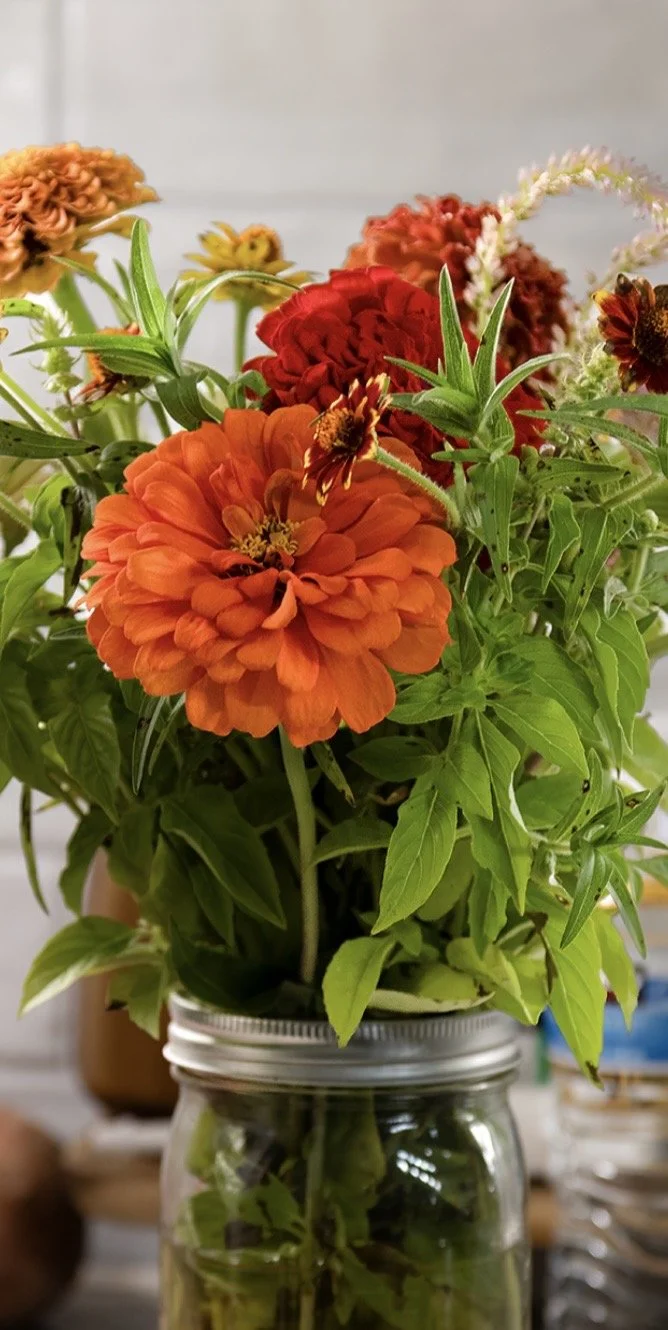
I still believe strength changes lives. But these days, I believe one of the greatest sources of strength isn’t found in a gym. It’s found in community.
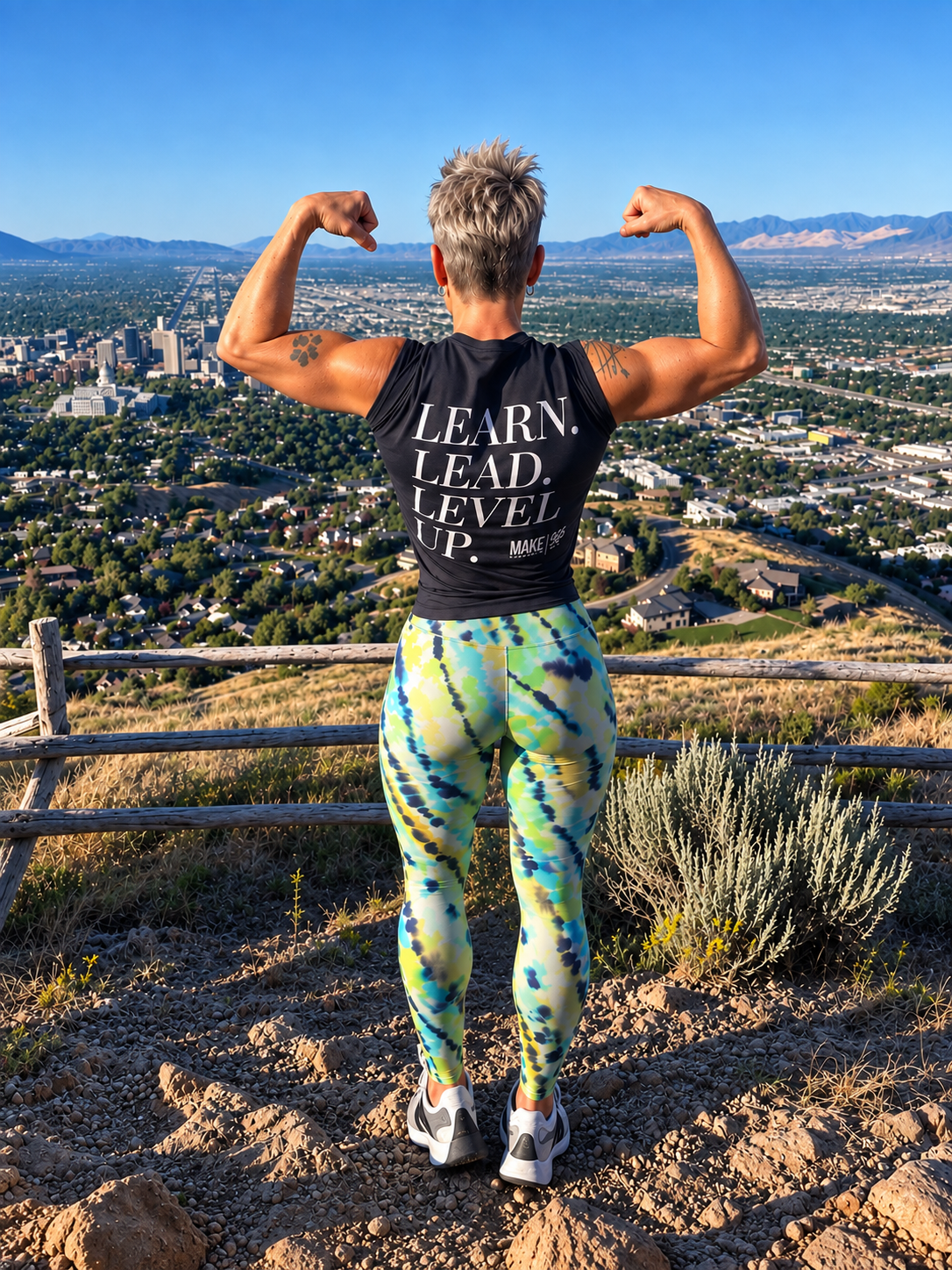
What Utah Taught Me About Thinking Bigger
Have you ever gone somewhere expecting to learn about work…and came home realizing you needed to change the way you think about your life?
That’s exactly what happened to me in Utah.
On the surface, I was there for a leadership even with MAKE Wellness. There were presentations, business strategy sessions, and time with people from all over the country who are building something they’re passionate about.
But what impacted me the most wasn’t a product or business lesson.
It was mindset.
For years, my life revolved around the gym. Every day had a schedule. Each hour had a purpose. My identity was tied to being “the trainer.”
When the gym closed, I knew I wasn’t walking away from helping people. I just wasn’t exactly sure what the new next chapter would look like. I knew I wanted to head down the path of retirement, but I definitely not ready to sit back and let my life just play out.
Utah gave me the space to think bigger.
Not bigger in the sense of making more money or building a larger business.
Bigger in the sense of asking, what kind of life do I actually want to create?
That question opened my eyes to really sit and think about my future life. Five, ten years down the road and I came to realize that I’ve planned for vacations and events more than I have for my own future!
I don’t want to fill my calendar for the simple sake of doing so.
I want to build a business that gives me the freedom to spend time with time with family, travel with Kevin, host women in my backyard, write, continue learning, and help women improve their health in ways that go far beyond the gym.
I want my work to fit my life - not my life to fit my work.
One of the biggest lessons I brought home is that the future isn’t something that just happens to us. It’s something we create.
Every decision we make today is either moving us toward the life we want or pulling us away from it.
That realization has changed the way I plan my days, set my goals, and even think about my purpose.
Instead of asking, “What do I need to do today?” I’m learning to ask, “Will today’s choices help create the woman I want to become?”
It’s a simple question, but it changes everything.
Utah reminded me that growth rarely happens when we stay comfortable. Sometimes we have to leave what’s familiar, surround ourselves with people who challenge us, and give ourselves permission to dream a little bigger.
I’m still figuring this new chapter out. But I can promise you, midlife is not the end of the story. We’re just turning the page.
It’s exciting to think that I’m not trying to recreate my old life because I’m intentionally building a new one. Progress creates momentum.
Until next time…keep becoming the women your future self will thank you for.
~ Melissa
The Question that Changed My Life
If you had told me 20 years ago that I’d become a personal trainer, own a gym, teach boxing, and help thousands of people improve their health, I would have laughed in your face!
During my teenage years, my mom had a small bakery and catering business. My dad, sisters and I helped out many times. At 15 years old I learned what customer service was all about. What I didn’t realize then was how much those afternoons of selling cookies and cakes and helping with catering events would benefit me later in life.
Before becoming a personal trainer, I had so many different jobs. Bartender, waitress, hospitality manager, food and beverage director, sales manager for a golf resort, insurance sales, administrative assistant, and the list goes on and on. The only jobs that I enjoyed and felt confident in doing were bartending and waiting tables. Somehow it all related back to when I was 15. Good food makes people happy. Happy people are fun to be around. It was an easy job that paid well. I say “easy” as in it’s not hard to treat people well and give them a great experience. It was not easy on the body as I got older, so I knew that was not what I’d be doing long term.
At the time I decided to start pursuing my fitness career, I was working for an insurance company. I took the tests more than once, but I did eventually obtain my health & life license and my P&C license. And even after finally passing, I realized I was completely miserable. One day my boss asked me a question “If you could do anything, what would you do?” Without hesitation I answered: “I would be a personal trainer”.
I spoke it into existence.
Then got to work making it happen.
I started out teaching bootcamps in 2013. First, it was friends coming to my bootcamps, then I taught teachers on their summer breaks and then went around to different schools and held bootcamps after work. I spent a lot of time driving around from park to park and school to school, so my business name, On the Geaux Fitness, fit perfectly! All those years ago when I learned to treat people well and give them a great experience - it was the same thing here, except it was exercise that was bringing the joy, not food.
It’s been non-stop ever since. I became a kickboxing instructor, a certified boxing coach, certified Tabata instructor, was the first person in Louisiana to open a non-contact boxing program for people with Parkinson’s disease, raised thousands of dollars for Parkinson’s disease with push up contests and cake auctions. Had my own gym for a short time and then finished out the last 6 years with a local gym where I have developed some of the best friendships.
When that chapter ended in March, there was a mix of sadness, gratitude, and excitement. I wasn’t ready to stop helping people - I just wanted to do it differently.
Looking back, I realize that fitness is so much more than the workouts. It’s about confidence. It’s about helping people believe in themselves. It’s about creating community. And while the gym chapter has ended, that mission hasn’t changed.
So, what do my days look like now? I’m still working on my business every day. Creating strength programs, designing a website, creating a newsletter, getting certified as a fasting coach, and informing people about natural peptides. I’ve probably been working harder these past 3 months that I have in years!
It’s funny to say, but it feels like I’m just getting started!
My New Chapter…Life After the Gym
For years, my life revolved around early morning alarms, coaching classes, being accountable to clients, and helping people move their bodies.
3am alarms. Gym life. Coaching. Repeat.
After more than 6 years of coaching at the gym, that chapter came to an end this spring. There was the potential to stay under new owners, but something in me knew it was time for a new chapter. Scary? A little. Exciting? Also, yes - especially with plans to travel more, camp more, and start building our retirement home in Tennessee.
In the last couple of years, I started realizing how much midlife changes things. And what women need in this season of life looks different than it did 10 or 20 years ago.
It’s not just about workouts anymore. Don’t get me wrong - strength matters (probably more now than ever). But also energy, healthy habits, feeling good in our skin, and figuring out how to feel like ourselves again.
I never thought it would happen, but that shift changed me too.
These days I’m still passionate about helping women get stronger, mentally and physically, which has led me to creating new ways to support you - from strength programs and nutrition coaching to wellness education and practical support for women navigating midlife. Some things are already here, some are evolving, and some are still being built, but I’m excited for this next chapter
Because as we age, we need support. We need education. We need realistic, sustainable ways to feel good again.
And honestly, we deserve to feel healthy, confident and beautiful as we age - not invisible.
So, if you’re navigating this season too…welcome. I’m really glad you’re here!