Peptides are everywhere these days. From shots to pills, from social media to conversations with friends, it seems like everybody is talking about them. Whether it’s GLP-1 medications for weight loss or peptides being promoted for muscle support, sleep, beauty, or injury repair, they’ve certainly become a hot topic.
When the weight loss injections became popular a few years ago, I didn’t know that GLP-1 itself is a peptide hormone our bodies naturally produce! Medications like semaglutide (Ozempic and Wegovy) are designed to mimic the effects of this natural hormone. But not all peptides work the same way, and they certainly don’t all serve the same purpose.
Let me just be clear from the get-go - I’m in no way judging anyone who uses GLP-1 medications, or who may be considering it, nor am I suggesting that taking a GLP-1 medication is an easy way out. For people who have struggled with their weight, these medications can offer meaningful help.
What About the Rest of Our Health?
There’s something I’ve been thinking about ever since I witnessed a dramatic change in a former client’s body composition a few years ago. It wasn’t necessarily the weight loss itself that concerned me. It was the amount of muscle being lost along with it. I could see the physical changes, and the body composition measurements confirmed what I was noticing.
Whether you’re taking a prescription GLP-1 medication, exploring peptide-based wellness products, simply working toward better health through lifestyle changes, there are things our bodies still need.
Are we eating enough protein? Are we maintaining muscle? Are we getting quality sleep, staying hydrated, managing stress, and making time to move our bodies?
After years of working in fitness and now expanding my knowledge of metabolic wellness, I’ve become even more passionate about helping women understand how their everyday habits influence their health.
I don’t want women to focus only on becoming smaller. I want us to become healthier, stronger, and more confident as we age. And that means looking at the whole picture, not just the number on the scale.
Are We Really Nourishing Our Bodies?
I’ve never been much of a food tracker. After years of working in fitness, I have a pretty good understanding of how my body responds to different foods and workouts. I’ve generally relied on that experience rather than tracking every calorie or macro.
I knew I wasn’t always eating enough protein or drinking enough water. I just didn’t have specific goals written down or pay much attention to the actual numbers. But recently, I’ve been paying closer attention to what I’m eating and how much I’m eating.
It’s been so eye-opening that I want other women to understand how helpful paying attention to their nutrition can be, especially when they’re struggling to reach their goals.
I’m not tracking everything now, but I’m more intentional. For example, I’ve started adding a scoop of protein powder to my overnight oats to help increase the protein in a breakfast I already enjoy.
That got me wondering…if meeting our nutritional needs takes this much attention when we have a normal appetite, imagine how challenging it might be for someone taking a medication that significantly reduces theirs.
For some people using a GLP-1 medication, getting enough protein, fiber, and other essential nutrients can become more difficult simply because they’re eating less.
And even without medication, we can become so focused on eating fewer calories that we overlook whether we’re actually nourishing our bodies. I’m not suggesting everyone needs to count macros forever. Sometimes a little awareness is enough to help us make better choices.
And nutrition is only one part of the picture.
Losing Weight Is One Thing. Keeping Your Muscle Is Another
After more than 35 years of being involved in fitness, one thing I will always emphasize is the importance of maintaining muscle, especially as we get older.
The number on the scale doesn’t tell the whole story. When we lose weight, we can lose both fat and muscle. And while GLP-1 medications can be effective for weight management, preserving muscle deserves attention regardless of how you’re losing weight.
Muscle helps us do so much more than look good in our clothes! It supports our strength, mobility, balance, and ability to stay independent as we age. It also plays an important role in how our bodies use glucose.
That’s why I encourage women to make resistance training part of their lifestyle, whether they’re taking medication or not. And that doesn’t mean you need to spend hours in the gym.
A consistent strength-training routine, adequate nutrition, and proper recovery can go a long way toward supporting your muscles. Because the goal isn’t just to lose weight. It’s to stay strong enough to enjoy the life you’re working so hard to create.
What About Everything Else?
We can pay attention to what we’re eating and make time for exercise, but what about everything else our bodies need? Sleep, stress management, hydration, and recovery matter, too!
One of the biggest things I’ve learned as I’ve expanded my education in metabolic wellness is how interconnected our daily habits really are.
Think about sleep. When we aren’t getting enough quality rest, it can affect our energy, appetite, mood, and ability to recover from exercise. And stress? We can’t eliminate it completely, but we can become more aware of how we’re responding to it.
I’ve become especially interested in the nervous system and how our bodies respond to ongoing stress. Sometimes improving our health isn’t about adding another rule about food. It’s about making room for rest, learning to slow down, and finding ways to feel calmer throughout the day.
Then there’s hydration, and this is something especially worth paying attention to if you’re taking a GLP-1 medication.
Did you know these medications may actually reduce your sense of thirst, too? Some research suggests that these medications can influence not only appetite but also how much we feel like drinking. Add in possible side effects like nausea, vomiting, or diarrhea, and staying properly hydrated becomes crucial.
That’s why I think hydration needs to be part of the conversation, not an afterthought. If you’re taking one of these medications, don’t assume you’re drinking enough just because you aren’t thirsty. Pay attention to your fluid intake and discuss your hydration needs with your healthcare provider.
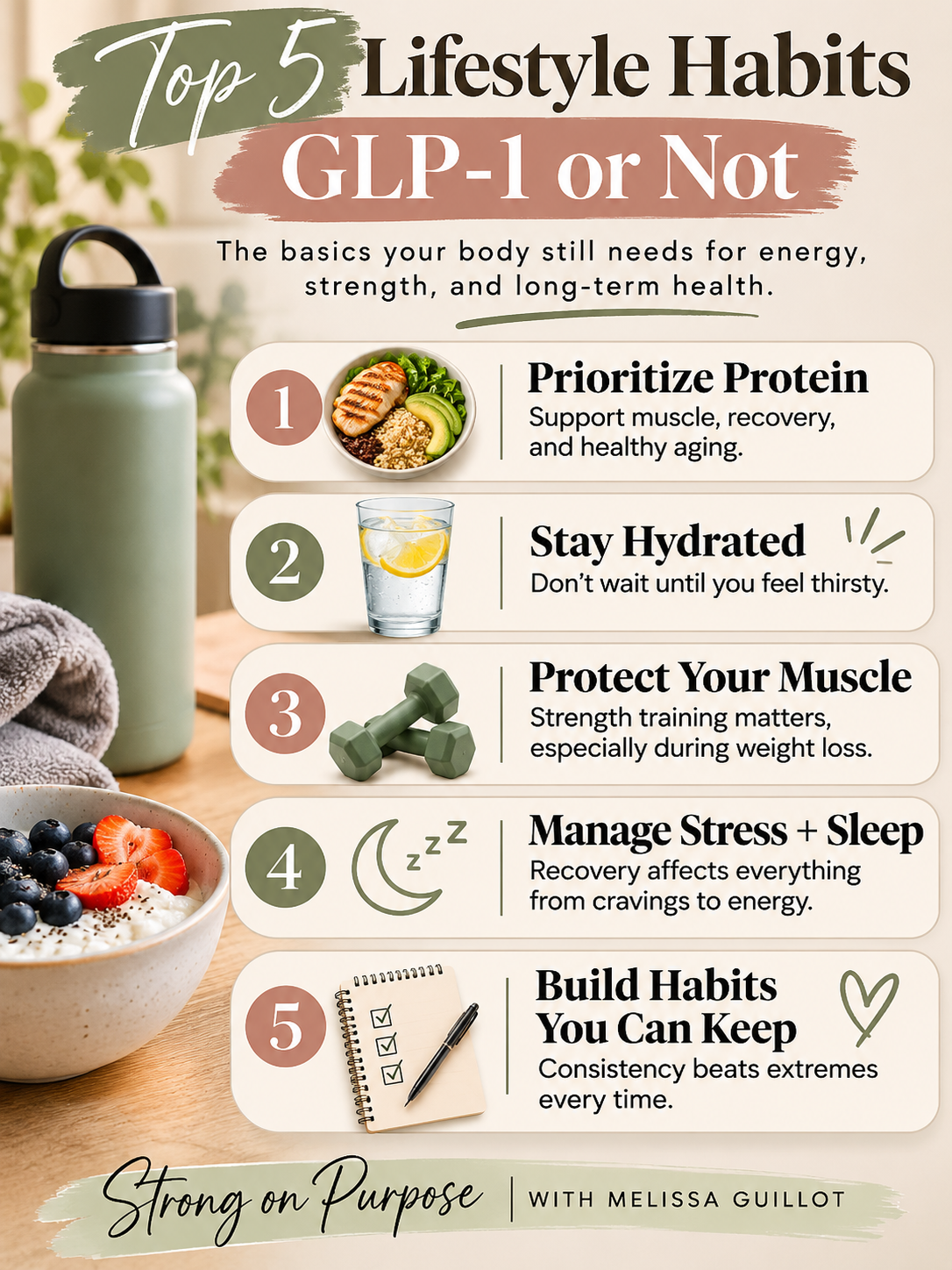
My Top 5 Lifestyle Habits for Better Health - GLP-1 or Not:
And speaking of ways our lifestyle can influence our health, here’s something else I’ve been learning about fasting. Researchers are studying how different fasting patterns may influence hormones involved in hunger and metabolism, including GLP-1. Our natural GLP-1 levels also respond to foods we eat, particularly when we eat a meal.
While fasting may influence these responses, it doesn’t work the same way as prescription GLP-1 medications. It’s just something to think about if you’re looking for answers and you’d rather not go the medication route.
For me, it’s another reminder of just how incredible our bodies are and why I love continuing to learn about the ways nutrition and lifestyle can support our health!
A Little Extra Wellness Support
Since we’re talking about peptides, I also want to share a little about MAKE Wellness and why these products are part of my own wellness journey.
I’ve been learning more about bioactive peptides and how certain ingredients are being developed to support the different functions in the body. And while GLP-1 medications and peptide-based wellness supplements are very different, I find the science behind peptides fascinating!
What I appreciate about MAKE is that its products are designed to complement different areas of wellnesses we’ve already discussed. MAKE uses plant-derived ingredients in its wellness formulations, and the products come in convenient oral and topical form — powders, capsules, serums and creams only. No needles!
I want to highlight five MAKE Wellness products:
Fit - Muscle Support: Designed to support muscle health, performance, and recovery. And you know how passionate I am about maintaining muscle as we age!
Hydrated - Hydration Support: Formulated with electrolytes to support hydration, something especially worth paying attention to when you’re eating less or taking medications that may affect your appetite and fluid intake.
Lean - Appetite and Craving Support: Marketed to support appetite management and help with cravings or what many people call food noise.
Stress Support: Designed to support relaxation and stress management, because taking care of our nervous system is part of taking care of our overall health.
Restored - Sleep Support: Formulated to support sleep quality and recovery. And if you’ve been following me for a while, you know how important sleep has become in my own wellness routine!
Remember this, supplements do not replace the foundations of a healthy lifestyle. And these products aren’t substitutes for prescription GLP-1 medications. I see them as additions to a wellness routine that already includes nourishing food and strength trainging.
If you’re taking medication or managing a health condition, check with your healthcare provider before adding any supplements.
And if you’re interested in MAKE Wellness, I’d be happy to share more about the products I use and recommend.
It’s About the Bigger Picture
At the end of the day, I’m not here to tell anyone which path they should take. Whether you’re considering any of these topics we’ve discussed here, I believe it’s important to understand your options, ask questions, and make informed decisions about your health with guidance from your healthcare provider.
What I do want is for women to understand that no matter which path they choose, their everyday habits still matter.
The food we eat, the muscle we work to maintain, the quality of our sleep, how we manage stress, and even something as simple as staying hydrated all contribute to our health.
And we don’t have to change everything overnight. Start by paying attention to one area where you could use a little improvement.
Maybe it’s adding more protein to breakfast, picking up a pair of dumbbells, or making sleep a priority. Small changes, practiced consistently, can make a meaningful difference over time.
It’s not just about how long we live or what the scale says. It’s about feeling strong, healthy, and confident enough to enjoy the life we’re living!
So, to peptide or not to peptide is a question that only you can decide. Whatever you choose, don’t overlook the importance of your everyday lifestyle.