Let’s Talk About Fiber (And Not for the Reason You Think)
When you hear the word fiber, what’s the first thing you think? Probably digestion, right?
Or maybe one of those commercials that makes fiber sound like something you start worrying about when you hit a certain age. That’s what I always thought.
WAIT! If you’re about to make a quick exit because you don’t think this matters at your age, hang with me for a few minutes.
Yes, fiber helps keep things moving. But the more I learn about nutrition, the more I learn that digestion is only part of the story.
Fiber can play a role in how full you feel after a meal, your blood sugar response, cholesterol, your gut microbiome, and overall metabolic and cardiovascular health.
In other words, fiber deserves a little more attention than we tend to give it.
So…What Exactly Is Fiber?
Fiber is a type of carbohydrate found in plant foods that your body doesn’t fully digest. Unlike many other carbohydrates that are broken down and absorbed, fiber makes its way through the digestive system relatively intact.
And that turns out to be a very good thing.
There are two main types of fiber: soluble and insoluble.
Soluble fiber dissolves in water and forms a gel-like substance. You’ll find it in foods such as oats, beans, apples, citrus fruits, and some seeds.
Insoluble fiber doesn’t dissolve in water. It adds bulk and helps move things through your digestive system. Vegetables, whole grains, nuts, seeds, and the skins of many fruits and vegetables are good sources.
Most whole plant foods contain a combination of the two, so the good news is, you don’t need to keep track of which type you’re eating.
Eating a variety of fiber-rich foods will naturally give you a mix of both.
Fiber Does a Lot More Than Keep You Regular
This is the part I find fascinating. Fiber feeds many of the beneficial bacteria living in your gut. Certain types of fiber are fermented by those bacteria and produce compounds called short-chain fatty acids, which are involved in gut and metabolic health.
It can help you feel satisfied longer after a meal, which in turn might also help with that “Why am I looking for something else to eat an hour later” feeling. Pairing fiber with protein and healthy fats can make a meal more filling and may help reduce some of that between-meal snacking.
Certain soluble fibers can help lower LDL cholesterol. And diets rich in fiber-containing foods are associated with better cardiovascular and metabolic health.
Why I’m Particularly Interested in Fiber in Midlife
One thing I wasn’t familiar with is how connected our gut is to the rest of our body - including hormones. There’s actually something called the estrobolome, a collection of gut bacteria involved in how our bodies metabolize estrogen. (I had never heard of it either!)
This becomes especially interesting in menopause and post menopause, when our ovaries are producing much less estrogen and the relationship between our gut microbiome and the estrogen still circulating in our bodies may become increasingly important.
Certain types of fiber help feed the beneficial bacteria in our gut, supporting healthy and diverse gut microbiome. That gives me another reason to pay attention to how much I’m getting.
Fiber isn’t going to magically “balance” our hormones, but supporting our gut is one more way we can support our bodies as we move through midlife.
How Much Fiber Do We Actually Need?
Here’s where things get interesting.
For women, the general recommendation is about 25 grams of fiber per day through age 50 and 21 grams per day after age 50. But most of us aren’t getting that much.
And I think this is where it becomes useful to stop thinking about fiber as a number on a nutrition label and start looking at what’s actually on our plates.
Berries. Beans. Lentils. Avocado. Chia seeds. Flax. Oats. Vegetables. Nuts. Whole grains…they add up. You don’t necessarily need a special “high-fiber” product. You might just need more plants.
But Please Don’t Go From 10 Grams to 30 Grams Overnight!
If you’re currently eating very little fiber, suddenly loading your plate with all the things I mentioned above will leave you bloated, miserable, and swearing off plant foods all together. Your digestive system — and the microbes living there — need some time to adjust.
I also noticed a slight headache later in the fast, which is probably because I hadn’t properly hydrated. And I quickly realized that moving those pavers was probably NOT the thing to do while fasting!
Perhaps the biggest thing I noticed was this: I am so much more focused and accountable when I have a plan than I tend to be when I don’t.
What This Can Look Like in Real Life
You don’t have to redesign every meal. Simply add berries and chia or ground flax to something you’re already eating. Add beans or lentils to a soup or salad. Choose the apple instead of the juice. Add some avocado to a meal. Swap a refined grain for a whole grain sometimes. Throw another vegetable onto your plate.
Small changes over time and repeated consistently…that’s where nutrition starts to look less like a diet and more like simply take care of yourself.
What if You Hate Vegetables?
I get it. Not everyone likes vegetables (my best friend won’t eat anything green). In all the years that I've coached women in fitness and nutrition; that’s one of the biggest objections I got. But you don’t have to live on broccoli to get enough fiber. I’ve mentioned other options above, but even with good intentions, getting enough fiber from food every day can be difficult. That’s where a fiber supplement may be useful.
I still believe that food should do most of the heavy lifting when possible because whole foods give us much more than fiber alone — but a supplement can fill the gap.
If you decide to add one, remember to ease into it. More is definitely not better in this case! Make sure you’re staying hydrated. If you take medications or have digestive issues, talk with your healthcare provider or pharmacist first because some fiber supplements can affect medication absorption or may not be appropriate for everyone.
Side note: for your hydration needs, if you’re looking for something more than water, I recommend Hydrated by Make Wellness. I drink 2-3 every single day. You can check it out here.
One More Thing I’m Learning in Midlife
Healthy eating doesn’t have to involve some big plan, more rules, more restrictions, more things I wasn’t supposed to eat.
Sometimes improving our nutrition isn’t about taking something away. It’s about asking: what could I add? More protein, more plants, more fiber, more foods that actually nourish me and help me feel good. And fiber is a pretty simple place to start.
Want an Easy Way to Add More Fiber?
Knowing you need more fiber is one thing. Standing in your kitchen wondering how to get more of it into your day is another.
So, I put together a simple Fiber Guide that explains why fiber matters, how much you need, the different types of high-fiber foods, and simple ways to start adding more.
No overcomplicating it. Just another tool to help you better understand what your body needs and put what you’re learning into practice.
Grab your free Fiber Guide here
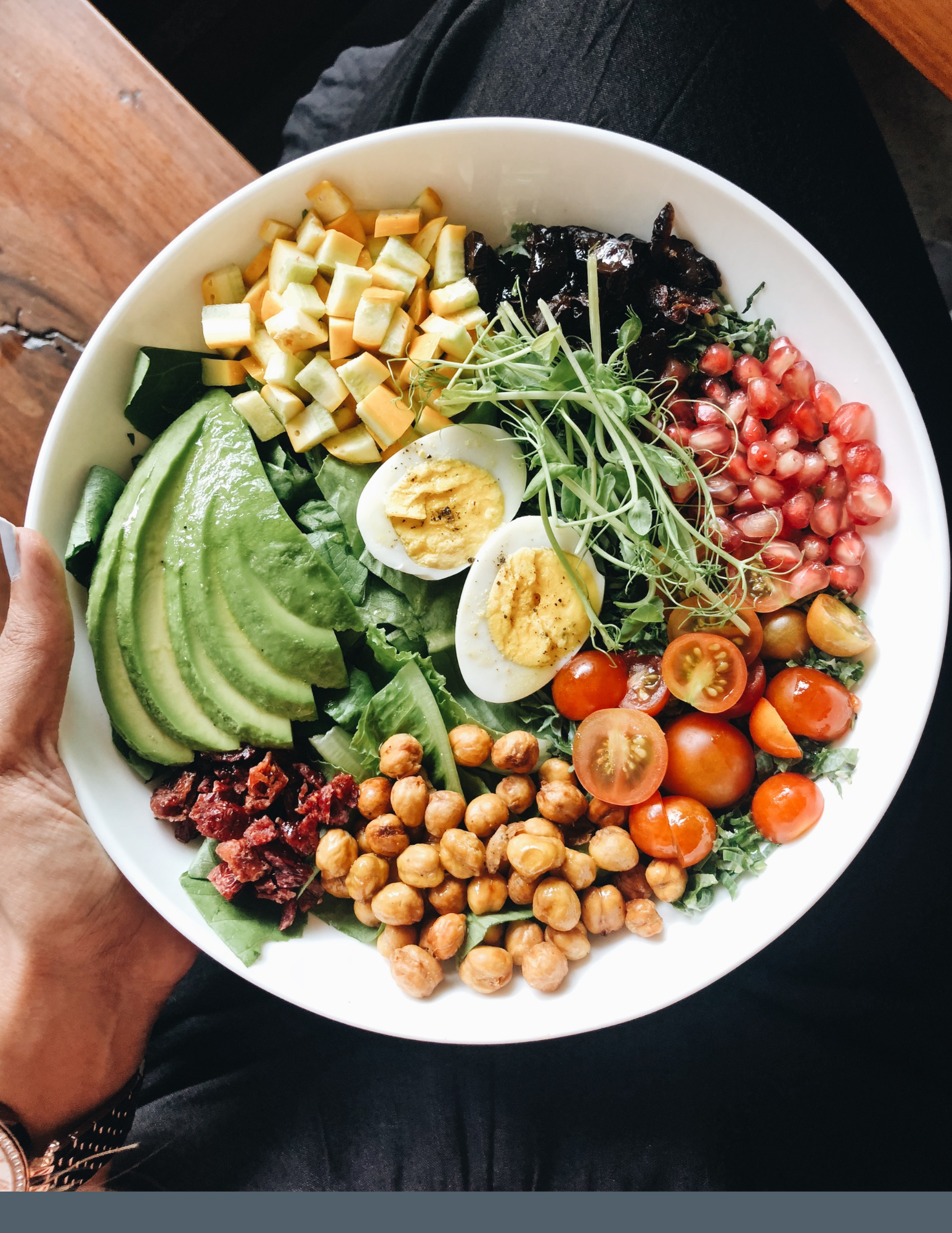
Fiber Forward!
Building my plate with plenty of fiber in mind — plants, color, healthy fats, and plenty of variety so I don’t get bored!
Curious About What Works for Your Body?
You don’t have to start with a 48-hour fast. In fact, I have something much simpler coming soon.
The 7-Day Shift is for women in midlife who are tired of feeling frustrated with their bodies and want to finally understand why things are happening the way they are, and what they can do about it. I’ll be sharing more about that very soon!